Made is the first film directed by Jon Favreau, the longtime character actor who became an indie darling when he wrote and starred in Swingers. While it becomes obvious the directing of Swingers by Doug Liman was possibly the real reason Swingers worked, Favreau and his Swingers co-star Vince Vaughn recapture some of the old magic. Vaughn deserves most of the credit with his self-deprecating comedic improvising and Favreau gets credit for knowing how to support his star and humanize the rather plotless, pointless story. Its all saved with some smooth cinematography and a sincere working class sentimental gritty romanticism. Its a bit of a waste of some veteran & future acting stars, but its a very enjoyable directorial debut if still a disappointing sophomore script.
Astronaut's Daughter is a bad mega budget high concept ripoff of Rosemary's Baby and Hitchcock's Suspicion. Pre-fame Charlize Theron carries the evil baby of peak-fame Johnny Depp's alien-possessed astronaut. Its full of genre cliches, Depp's horrid fake Southern accent and stylized but braindead commercial directing. I still think its a high kitsch affair that is enjoyable. The DP and Production Designer are the true stars and the whole affair is a great mirror of moody Y2K shallowness and pop culture nostalgia. Also, given recent allegations of Depp's domestic abuse and his all-but-confirmed Luciferian status, this has a few moments of convincing menace. I actually think Depp should switch to playing villains now that his youth and sex appeal is long gone.
Released the same fucking year as Astronaut's Daughter, Ninth Gate is Roman Polanski's return to Hollywood filmmaking and another Johnny Depp vehicle based on Satanism. Thankfully its a much better film. Polanski paints a dark camp hybrid of Rosemary's Baby and Chinatown, his two biggest 70s successes. Its a brilliant way to tie the films together and reveal the shared subtexts. Its wonderfully directed, shot, plotted and Polanski pulls one of the best performances from the wooden Depp (who is doing a rather lazy impression of Jack Nicholson throughout). Whereas Astronaut's is a lukewarm Hollywood meditation on Freemason subversion, Gate is a fearless celebration of mythic Satan worship in cinema as well as a aggressively respectful examination of real world Luciferianism as a philosophy. It can't be as shocking or clever as Polanski's early horror films, but its anti-Christian themes are even more pronounced and playful.
Waking Life is a wonderful, overwhelming and life-affirming celebration of pop existentialism from Richard Linklater, Generation X's cinematic hippie philosopher extraordinaire. Feeling like a Brechtian documentary or simply a psychedelic dream, Linklater keeps it accessible, warm, fun and constantly enlightening. The film features a totally new form of storytelling with diverse influences with heavy subject matter but retains a quality of unpretentiousness. The best film on this short list.
Showing posts with label reviews. Show all posts
Showing posts with label reviews. Show all posts
Monday, May 28, 2018

Monday, May 21, 2018
Alien Covenant 2017 2ND REVIW
This film may not have the entertainment and thrill of Alien 2 & 3, but it its so much more satisfying as a sequel (prequel really). The theme of a Luciferian intelligence lurking in technology ties back to the original Alien and also the original Blade Runner. I would argue AC and Prometheus are essentially bridging the worlds of both Ridley Scott franchises in structure, style and continuity. And why not, when the other Alien films (and especially Alien vs Predator films) really play a loose fanboy level of shared history, thats past, presents and future.
Now is the film about real world unsubstantiated conspiratorial possibilities? We don't know and thats where the fear as an audience becomes overwhelming in a pronounced EXISTENTIALLY human way. Juggling the metaphysics of the white man-created mythology is heavy, confusing, sometimes taxing but Ridley Scott is putting on a master teaching class about our shared human experience. He's educating you on the past. Why? Not to welcome you into an elitist club of intellectuals who worship ego and reject utopian progress, but to speak against abuses of any form of collective human power on Earth or in any kind of Heaven, God or man-made.
And yet there's a grim sadness. A depressed bleakness that highlight's a fragile Romantic soul that bleeds its heart for the suffering of others, rather than let them burn in the ravaging stages of any Late Capitalism.
Dullness & pain is felt in the muted aesthetics of Ridley's interpretation of not only the abstract themes of Survivalism, Cave Art, Primitivism, Tribalism, Sexism, Racism, War, Murder, Genocide, Apocalypse, Hell, Extinction, Limbo, Eternity, Nothingness, Nihilism, Horror, Fantasy, Mythology, Romanticism, Occult, Speculative, Science, Fiction, Media, Art, Capitalism, Socialism, Satanism, Christianity, Deitism, Dualism, Dialectic, Neutrality, Monism, Pluralism, Mathematics, Economics, Materialism, Idealism, Marxism, Postmodernism itself and etc.
Its a leisurely film, the kind old directors often make. But it still has enough emotional intensity, mental clarity and visual splendor to satisfy any audience I think. Its very tame in some respects. Subtle rather than outspoken or garish. I haven't always agreed with Scott's outlook on life and society, but I think he has grown as a thinker and artist and watching his descent & ascent commercially and politically has helped an entire generation mature through the shared film-going experience. And for that I am personally grateful to his work.
I think the film, most essentially, sets up a clever and radically original direction for the series. Whether that is retained as this Fox buyout plays on. I don't think Disney can survive this type of inflation so fast. The bubble has to burst. And when it does, the assets of Fox will go to someone who has more buying power than a cost-cutting Disney. I would love if Scott Free could buy Alien or Blade Runner just so Scott's vision can be preserved not in a capitalist sense of corporatizing with monopolists who cheat the market. But actually belong to the workers, unlike the exploited victims in Scott's films.
Walt Disney left an uber-moral, somewhat Stalinist version of rightwing Devil-worshipping brand of communist Christianity built on fleecing Believers for their money a(donations) and silencing their economic opposition as the true Devils. The Devil is a lie in the sense that to believe the character is to believe in the character. What I mean is that Christianity teaches to hate an entire group (Jews) while Satanism teaches to love a non-existent collective animal urge to murder and rape out of some primordial slime DNA's quest for fungal infection in order to reproduce. This scientific revelation has combined with a previous form of Atheism that now sees all religion as a shared fictionalized subjectivity but unconsciously leaving an objective record of human shared self-awareness. We have a hivemind built of psychic energy that seems to exceed time and space. Thats a very rewarding reality but brutal at times when too much order leads to spontaneous anarchy.
Scott's films vs the predominant American moralism in Hollywood. Scott is English so he gets it as much as any European director can probably get it. He follows Kubrick, Franco, Welles and Ridley's brother Tony. Admittedly Ridley Scott's work often feels too willing to comply with corporate interest and obscuring oblique censorship, but he retains a fiery voice that is Pro-Independence always. He's really the last mainstream director to still work freelance as a prolific commercial level. That may turn many off from the sincerity of what he's selling. But I think he's doing as much as he is allowed so he can help the widest audience while hopefully not fleecing too many idiots who don't get the knowledge.
So is Ridley Scott saying anything valuable in his message lately? Has he ever changed his message to sell out? Remember that he entered the film world as a director of big budget commercials and TV. So if anything he's probably started from the right and swung left as he's aged and seen exploitation and the ravages of modernism first hand. And he's still making the most elegant, technological, daunting and challenging films in the business and only getting sharper. Scott is one of filmmaking's masters and has he become one of its biggest "anti-heroic heroes"? Is he simply an Anti-Hero? Is he too a Villain to the complexion of the changing, conglomerized Hollywood product? I think so.
With Alien Covenant, Scott shows us that we create our own demons. To not believe in God is to believe in Self alone. As this robot sets out to prove he is God and greater than his own Creation, he never learns that he is merely a cheap imitation of his Creator's own faulted Will. Many of Scott's films focus on the blinded quest of Aryan supremacy, the fall of Western civilization in a perverse self-love that pits Self against The Other. Man no longer can love brother or sister, love or relation, counterpart or Self. The story of David the android is similar to Roy Batty or Pinocchio or Frankenstein's Monster or Lucifer, the original Anti-Hero. He wants to know what love is because his father gave him none. The search for "Love" as an abstract intellectual goal and not a natural, chemical, sensual experience is why David feels he must create a demonized, hybridized, most primitive and most deadly expression of his own lonely "superiority" complex. What starts in a factory traverses through space travel, global genocide and finally lab-created colonization of the universe. Scott paints a striking metaphor - a moving mirror painted in pulp fiction signs - to reflect the misguided and totally self-satisfied destructive impulses of White Man's fall from grace of God. His failure to become God.
Now is the film about real world unsubstantiated conspiratorial possibilities? We don't know and thats where the fear as an audience becomes overwhelming in a pronounced EXISTENTIALLY human way. Juggling the metaphysics of the white man-created mythology is heavy, confusing, sometimes taxing but Ridley Scott is putting on a master teaching class about our shared human experience. He's educating you on the past. Why? Not to welcome you into an elitist club of intellectuals who worship ego and reject utopian progress, but to speak against abuses of any form of collective human power on Earth or in any kind of Heaven, God or man-made.
And yet there's a grim sadness. A depressed bleakness that highlight's a fragile Romantic soul that bleeds its heart for the suffering of others, rather than let them burn in the ravaging stages of any Late Capitalism.
Dullness & pain is felt in the muted aesthetics of Ridley's interpretation of not only the abstract themes of Survivalism, Cave Art, Primitivism, Tribalism, Sexism, Racism, War, Murder, Genocide, Apocalypse, Hell, Extinction, Limbo, Eternity, Nothingness, Nihilism, Horror, Fantasy, Mythology, Romanticism, Occult, Speculative, Science, Fiction, Media, Art, Capitalism, Socialism, Satanism, Christianity, Deitism, Dualism, Dialectic, Neutrality, Monism, Pluralism, Mathematics, Economics, Materialism, Idealism, Marxism, Postmodernism itself and etc.
Its a leisurely film, the kind old directors often make. But it still has enough emotional intensity, mental clarity and visual splendor to satisfy any audience I think. Its very tame in some respects. Subtle rather than outspoken or garish. I haven't always agreed with Scott's outlook on life and society, but I think he has grown as a thinker and artist and watching his descent & ascent commercially and politically has helped an entire generation mature through the shared film-going experience. And for that I am personally grateful to his work.
I think the film, most essentially, sets up a clever and radically original direction for the series. Whether that is retained as this Fox buyout plays on. I don't think Disney can survive this type of inflation so fast. The bubble has to burst. And when it does, the assets of Fox will go to someone who has more buying power than a cost-cutting Disney. I would love if Scott Free could buy Alien or Blade Runner just so Scott's vision can be preserved not in a capitalist sense of corporatizing with monopolists who cheat the market. But actually belong to the workers, unlike the exploited victims in Scott's films.
Walt Disney left an uber-moral, somewhat Stalinist version of rightwing Devil-worshipping brand of communist Christianity built on fleecing Believers for their money a(donations) and silencing their economic opposition as the true Devils. The Devil is a lie in the sense that to believe the character is to believe in the character. What I mean is that Christianity teaches to hate an entire group (Jews) while Satanism teaches to love a non-existent collective animal urge to murder and rape out of some primordial slime DNA's quest for fungal infection in order to reproduce. This scientific revelation has combined with a previous form of Atheism that now sees all religion as a shared fictionalized subjectivity but unconsciously leaving an objective record of human shared self-awareness. We have a hivemind built of psychic energy that seems to exceed time and space. Thats a very rewarding reality but brutal at times when too much order leads to spontaneous anarchy.
Scott's films vs the predominant American moralism in Hollywood. Scott is English so he gets it as much as any European director can probably get it. He follows Kubrick, Franco, Welles and Ridley's brother Tony. Admittedly Ridley Scott's work often feels too willing to comply with corporate interest and obscuring oblique censorship, but he retains a fiery voice that is Pro-Independence always. He's really the last mainstream director to still work freelance as a prolific commercial level. That may turn many off from the sincerity of what he's selling. But I think he's doing as much as he is allowed so he can help the widest audience while hopefully not fleecing too many idiots who don't get the knowledge.
So is Ridley Scott saying anything valuable in his message lately? Has he ever changed his message to sell out? Remember that he entered the film world as a director of big budget commercials and TV. So if anything he's probably started from the right and swung left as he's aged and seen exploitation and the ravages of modernism first hand. And he's still making the most elegant, technological, daunting and challenging films in the business and only getting sharper. Scott is one of filmmaking's masters and has he become one of its biggest "anti-heroic heroes"? Is he simply an Anti-Hero? Is he too a Villain to the complexion of the changing, conglomerized Hollywood product? I think so.
With Alien Covenant, Scott shows us that we create our own demons. To not believe in God is to believe in Self alone. As this robot sets out to prove he is God and greater than his own Creation, he never learns that he is merely a cheap imitation of his Creator's own faulted Will. Many of Scott's films focus on the blinded quest of Aryan supremacy, the fall of Western civilization in a perverse self-love that pits Self against The Other. Man no longer can love brother or sister, love or relation, counterpart or Self. The story of David the android is similar to Roy Batty or Pinocchio or Frankenstein's Monster or Lucifer, the original Anti-Hero. He wants to know what love is because his father gave him none. The search for "Love" as an abstract intellectual goal and not a natural, chemical, sensual experience is why David feels he must create a demonized, hybridized, most primitive and most deadly expression of his own lonely "superiority" complex. What starts in a factory traverses through space travel, global genocide and finally lab-created colonization of the universe. Scott paints a striking metaphor - a moving mirror painted in pulp fiction signs - to reflect the misguided and totally self-satisfied destructive impulses of White Man's fall from grace of God. His failure to become God.
Friday, March 2, 2018
Black Moon 1975 / The Strange Case if Dr. Jekyll and Miss Osbourne 1981 / Messiah of Evil 1973 / Bloodsucking Freaks 1976 / The Devils 1971
"Black Moon" is a Dadaist dream about a young girl who is fleeing a war between men & women. She seeks solace in a dreary country farm occupied by an old woman who knows everything about her and an incestuous mute brother & sister. The film is full of abstract episodes that are probably clever statements on female sexual maturity a'la Alice in Wonderland, but I didn't recognize them. Overall, the experience is rather grating. Its studiously composed but the film feels pretentious with its abundance of cruelty to animal actors, boring metaphors and faux-educational exploitation of its extremely young actress' sexuality. Its worth a watch because it is so unique and its frequently entertaining, but its no lost gem. My impression of director Louis Malle is a wannabe Godard/Bunuel without much originality or talent.
Walerian Borowczyk is much more impressive with his loose adaptation of a classic horror novel. He brings so much voyeuristic intensity and expressive technique to what has to be a minuscule period piece production. The film is a rare accomplishment in balancing erotic and horror tension so well. This is truly one of the most sensual and glossy films of its period (or any period) but it has a grisly urgency. It walks that fine line between art and exploitation beautifully. Seek this movie out.
Messiah of Evil is a film by the couple who wrote Temple of Doom & Howard the Duck for George Lucas. Its a post-hippie horror "feature" about a young woman in a spooky seaside town of zombies. Its freakishly similar to Franco's Virgin Among the Living Dead but they were released the same year (but, Virgin was shot in '71). Its a decent snapshot of a time and generation but its not effective on scares or mood beyond some stylish lighting and minimalist staging. It feels like an arty cash-in on drive-in films without any respect for its audience. Its determined to show off its own intelligence, but there isn't much. To its credit, the film features production design by Jack Fisk, husband of Sissy Spacek and lifelong friend of David Lynch. There is actually a HUGE impression of Twin Peaks in the setting of this story, so its memorable and important for that.
Bloodsucking Freaks could be the best film Troma ever released, alongside The Toxic Avenger and maybe The Last Horror Film. Like those movies, it is a lurid portrait of NY independent filmmaking from a bygone era of sleaze, art and political dissidence. This is the most extreme of its kind, a satire about white slavery full of cannibalism, torture, murder and brainwashing. A decade ago, this film made me queasy to watch. Now I appreciate the immense intelligence and bravery in pulling off such a disturbing but complex little exploitation. A film like this is looking to make a statement more than a profit.
I finally watched Ken Russell's The Devils. Besides maybe a snippet of Tommy, this is my first film by popular British cult director. Wow. What a brilliant technical director and stylist he is. His camera is so alive and magnetized by every action on the screen. There isn't one lazy performance or dull scene or false moment in this classic story of religious persecution and moral corruption. The story itself is a great and bold attack on Catholicism, but it avoids tempting melodrama or bland tragedy by setting us up with so many laughs and spectacles. Russell's film has a broad irony that had to be a game-changer then. He really reflects the Mod sensibility of his generation and marries it with the most classic but unsuspecting narrative tropes. And its more than just a bunch of clever tricks. It moves you and haunts you.
Walerian Borowczyk is much more impressive with his loose adaptation of a classic horror novel. He brings so much voyeuristic intensity and expressive technique to what has to be a minuscule period piece production. The film is a rare accomplishment in balancing erotic and horror tension so well. This is truly one of the most sensual and glossy films of its period (or any period) but it has a grisly urgency. It walks that fine line between art and exploitation beautifully. Seek this movie out.
Messiah of Evil is a film by the couple who wrote Temple of Doom & Howard the Duck for George Lucas. Its a post-hippie horror "feature" about a young woman in a spooky seaside town of zombies. Its freakishly similar to Franco's Virgin Among the Living Dead but they were released the same year (but, Virgin was shot in '71). Its a decent snapshot of a time and generation but its not effective on scares or mood beyond some stylish lighting and minimalist staging. It feels like an arty cash-in on drive-in films without any respect for its audience. Its determined to show off its own intelligence, but there isn't much. To its credit, the film features production design by Jack Fisk, husband of Sissy Spacek and lifelong friend of David Lynch. There is actually a HUGE impression of Twin Peaks in the setting of this story, so its memorable and important for that.
Bloodsucking Freaks could be the best film Troma ever released, alongside The Toxic Avenger and maybe The Last Horror Film. Like those movies, it is a lurid portrait of NY independent filmmaking from a bygone era of sleaze, art and political dissidence. This is the most extreme of its kind, a satire about white slavery full of cannibalism, torture, murder and brainwashing. A decade ago, this film made me queasy to watch. Now I appreciate the immense intelligence and bravery in pulling off such a disturbing but complex little exploitation. A film like this is looking to make a statement more than a profit.
I finally watched Ken Russell's The Devils. Besides maybe a snippet of Tommy, this is my first film by popular British cult director. Wow. What a brilliant technical director and stylist he is. His camera is so alive and magnetized by every action on the screen. There isn't one lazy performance or dull scene or false moment in this classic story of religious persecution and moral corruption. The story itself is a great and bold attack on Catholicism, but it avoids tempting melodrama or bland tragedy by setting us up with so many laughs and spectacles. Russell's film has a broad irony that had to be a game-changer then. He really reflects the Mod sensibility of his generation and marries it with the most classic but unsuspecting narrative tropes. And its more than just a bunch of clever tricks. It moves you and haunts you.
Thursday, February 22, 2018
Sgt Kabukiman NYPD 1990 / The Evil Dead 1981 / Monty Python & The Holy Grail 1975
Kabukiman is Lloyd Kaufman & Michael Herz' comeback film after the drizzling Toxic Avenger 3 and is their last directing collaboration to date (with Herz becoming the primary producer). Kabukiman tweaks the Troma formula by satirizing/exploiting a big budget film (Batman) and toning down the sex & violence. Its more of a return to the screwball comedies Troma produced pre-Toxic Avenger. The film is low on laughs and the action is amateurish, but its heavy on social commentary and low budget charm.
Troma films have this unique quality of mixing slapstick violence and realistic violence, which is very surreal and creates a meaningful conflict in style. At the same time, you can't take the drama seriously or the comedy lightly (perfectly realized in the fist two Toxic Avenger films and the original Class of Nuke 'Em High). I actually think this element works better in SK than in Toxie 3. Whereas that film had a moody aura that was actually missing humor, SKN is humor with a dash of realism. It plays as a very modern film because of this gritty slapstick and artificial realism. Let's face it: Guardians of the Galaxy movies are Troma films minus the political activism, risky jokes or modest production. Kabukiman is not one of Troma's best but its one of their most sincere and least offensive.
The Evil Dead is not a masterpiece in my eyes, but its one of the most impressive debuts of a director to date. The technical know-how, genre-savvy and inventive low-budget creativity is almost unparalleled. The plot is a more conservative, lowbrow, exploitative remix of the Texas Chainsaw Massacre, The Exorcist, the early work of Wes Craven, an obscure film called Equinox and a few others (the nod to Rosemary's Baby is almost groan-inducing). But the postmodern genre of "fan film" owes a lot to Evil Dead. Raimi takes what could've been absolutely absurd and kitsch and makes it absurdist and camp. The poor continuity, cheap FX and amateur performances work cohesively to create a Gonzo style. I've never found Evil Dead to be the emotionally intense or haunting commentary that truly great horror films are, but it has a claustrophobic mood and grim surrealism that perfectly bridges the 1970s to the 1980s. Its artistic entertainment, not entertaining art. Thats okay for such a small project and its still the best thing Raimi has ever done.
I grew up loving Holy Grail for its downbeat rhythm and strange, inexplicable laughs but only now do I recognize the intelligent design and commentary behind the carefully crafted surrealism. Holy Grail works as a series of deconstructionist sketches, each applying the group's shared Marxist philosophy to a different subject: monarchy, feminism, nationalism, militarism, homophobia, racism, generational transition, existentialism, nihilists etc. Cleverly the postmodernists tackle British modernism by starting at the source, the ridiculous legend of King Arthur and his insane, murderous, superstitious and literally criminal Knights of the Round Table. By today's standards, some of the humor might verge on insensitive, ex. the somewhat racist Black Knight skit is amended in Meaning of Life's Zulu skit. But overall its a witty, next-level and quite elementary guide to Western intellectualism.
Famously, Lorne Michaels and Chevy Chase met at a screening of Holy Grail and basically conceived SNL as the American "Flying Circus". Watching Holy Grail you find everything SNL lacked as a totally poser, hipster, neoliberal misreading of surrealist political satire. That show was more diverse, more populist and more upbeat, but not nearly as enlightened, dangerous or moralistic. I'm kind of tired of SNL being honored as such a groundbreaking institution of comedy when it never surpassed Python in the most important element: humor.
Troma films have this unique quality of mixing slapstick violence and realistic violence, which is very surreal and creates a meaningful conflict in style. At the same time, you can't take the drama seriously or the comedy lightly (perfectly realized in the fist two Toxic Avenger films and the original Class of Nuke 'Em High). I actually think this element works better in SK than in Toxie 3. Whereas that film had a moody aura that was actually missing humor, SKN is humor with a dash of realism. It plays as a very modern film because of this gritty slapstick and artificial realism. Let's face it: Guardians of the Galaxy movies are Troma films minus the political activism, risky jokes or modest production. Kabukiman is not one of Troma's best but its one of their most sincere and least offensive.
The Evil Dead is not a masterpiece in my eyes, but its one of the most impressive debuts of a director to date. The technical know-how, genre-savvy and inventive low-budget creativity is almost unparalleled. The plot is a more conservative, lowbrow, exploitative remix of the Texas Chainsaw Massacre, The Exorcist, the early work of Wes Craven, an obscure film called Equinox and a few others (the nod to Rosemary's Baby is almost groan-inducing). But the postmodern genre of "fan film" owes a lot to Evil Dead. Raimi takes what could've been absolutely absurd and kitsch and makes it absurdist and camp. The poor continuity, cheap FX and amateur performances work cohesively to create a Gonzo style. I've never found Evil Dead to be the emotionally intense or haunting commentary that truly great horror films are, but it has a claustrophobic mood and grim surrealism that perfectly bridges the 1970s to the 1980s. Its artistic entertainment, not entertaining art. Thats okay for such a small project and its still the best thing Raimi has ever done.
I grew up loving Holy Grail for its downbeat rhythm and strange, inexplicable laughs but only now do I recognize the intelligent design and commentary behind the carefully crafted surrealism. Holy Grail works as a series of deconstructionist sketches, each applying the group's shared Marxist philosophy to a different subject: monarchy, feminism, nationalism, militarism, homophobia, racism, generational transition, existentialism, nihilists etc. Cleverly the postmodernists tackle British modernism by starting at the source, the ridiculous legend of King Arthur and his insane, murderous, superstitious and literally criminal Knights of the Round Table. By today's standards, some of the humor might verge on insensitive, ex. the somewhat racist Black Knight skit is amended in Meaning of Life's Zulu skit. But overall its a witty, next-level and quite elementary guide to Western intellectualism.
Famously, Lorne Michaels and Chevy Chase met at a screening of Holy Grail and basically conceived SNL as the American "Flying Circus". Watching Holy Grail you find everything SNL lacked as a totally poser, hipster, neoliberal misreading of surrealist political satire. That show was more diverse, more populist and more upbeat, but not nearly as enlightened, dangerous or moralistic. I'm kind of tired of SNL being honored as such a groundbreaking institution of comedy when it never surpassed Python in the most important element: humor.
Sunday, February 18, 2018
The Bloody Judge 1969 / The Demons 1973 / Doriana Grey 1976 / Lorna the Exorcist 1974 / Sexy Sisters 1977 / Sinner - Diary of a Nyphomaniac 1973
I'm really in the last string of major Franco titles to review. These are particularly darker and more trying films from his more depressive and destitute days. I don't enjoy them as much, but they fit my current mood and reveal more of Franco's character and inner battles.
The Bloody Judge is some prime Franco. It could be the best work but maybe not the best film from his soaring commercial career in the late 1960s. Its just as disturbing yet alternately beautiful. Its smart and not at all exploitative. It feels sincere to its historical influences and you can measure it favorably to Hollywood of the period or this current age. Its plot-themes are very pressing: a psychotic conservative authoritarian and probable secret society member who is persecuting the impoverished population he presides over. Scary stuff. This and the other Franco roles are Christopher Lee at his most effective as an actor and a scary "horror movie" presence. Highly recommended!
The Demons follows the same vein but its made for a much sleazier producer with cheaper resources and questionable tastes. Robert de Nestle replaces Harry Allan Towers, which is not a totally skewed trade-off. Its so tawdry and lurid, you can't help but admire it. And a stoned Franco does a great job on damage control. I think this is probably the most tightly plotted and classically shot of de Nestle's time with Franco. It could be the most polished overall and its one of the most erotic and aren't Franco's film supposed to be erotic primarily? The film has some surreal, absurd, camp and kitsch treats as usual. Jess was really in a free-form mood with some impressive resources to bounce off of.
Doriana Grey fits the 70s definition of a porno. You can't quite interpret it the same as the traditional commercial narrative film or even the arthouse experiments or even the sleaziest softcore movies. But it can have the same value. Doriana Gray has the loosest of loose stories about twin Linda Romay's who are soul mates and need to make lesbian love... and maybe its all a dream. Its some heavy, artful, technically brilliant stuff to prop up a lot of graphic sex scenes. And it works. I wasn't thrilled by plot or character because thrills weren't the goal. I find the sex scenes alluring in concept and cathartic and beautifully staged. Pornographic cinema has always had its place and been an influential genre steeped in important cultural art. Franco channels something ancient in these erotic period pieces of the 1970s. I favor this to some more narrative but less erotic films.
Lorna the Exorcist came out earlier (another de Nestle film). Again, the plot is small and lifted essentially from merging Eugenie with other shit, Rumpelstiltskin perhaps (Faust is mentioned). This film sets the stage for following explicit sex films by Jesus Franco: hotels, long takes of scenery, extended love scenes and very obtuse but effective dialogue and minor action. Actually, Franco's Other Side of the Mirror led to this mini-genre in its X-rated cut. Lorna has a wonderfull psychedelic rock/electric jazz score and otherworldly photography and the performances are sharp. Its plot is more strange than anything that precedes it, but maybe more easy-to-follow than what follows it. This is not for everyone but Francophiles will rank it highly.
Sexy Sisters is one of many films where blonde actress Karine Gambier is masochistically tied up and abused mentally and physically by a brunette. I very much enjoy the film Franco made for producer Erwin Dietrich but apparently he stunted Franco's experimental camerawork. Their collaborations are always minimalist, polished and focused on erotica over statements or creativity. Thats fine. Sexy Sisters is one of the weaker of their films but it has decent dramatic plot, performances and great design on a dime.
Sinner is probably the biggest slam dunk out of this batch of reviews. It integrates an original story structure, haunting music, nightclub atmosphere, feminist romance and melodramatic tragedy. And it remains classy by rejecting the hardcore sex or sadism you might expect. This is more of a personal statement or responsible professional job. And it has that rare kind of Franco ending that is so open-ended that it drives you mad and forces you to meditate on the story's reality and its metaphors. I like when Franco's films are personal and still can easily convince the mainstream of his genius. I hope this film was a grindhouse smash because its one of the purest examples of drive-in aesthetics you can find. It might have been too sexy and unadulterated for most suburban drive-in's though.
The Bloody Judge is some prime Franco. It could be the best work but maybe not the best film from his soaring commercial career in the late 1960s. Its just as disturbing yet alternately beautiful. Its smart and not at all exploitative. It feels sincere to its historical influences and you can measure it favorably to Hollywood of the period or this current age. Its plot-themes are very pressing: a psychotic conservative authoritarian and probable secret society member who is persecuting the impoverished population he presides over. Scary stuff. This and the other Franco roles are Christopher Lee at his most effective as an actor and a scary "horror movie" presence. Highly recommended!
The Demons follows the same vein but its made for a much sleazier producer with cheaper resources and questionable tastes. Robert de Nestle replaces Harry Allan Towers, which is not a totally skewed trade-off. Its so tawdry and lurid, you can't help but admire it. And a stoned Franco does a great job on damage control. I think this is probably the most tightly plotted and classically shot of de Nestle's time with Franco. It could be the most polished overall and its one of the most erotic and aren't Franco's film supposed to be erotic primarily? The film has some surreal, absurd, camp and kitsch treats as usual. Jess was really in a free-form mood with some impressive resources to bounce off of.
Doriana Grey fits the 70s definition of a porno. You can't quite interpret it the same as the traditional commercial narrative film or even the arthouse experiments or even the sleaziest softcore movies. But it can have the same value. Doriana Gray has the loosest of loose stories about twin Linda Romay's who are soul mates and need to make lesbian love... and maybe its all a dream. Its some heavy, artful, technically brilliant stuff to prop up a lot of graphic sex scenes. And it works. I wasn't thrilled by plot or character because thrills weren't the goal. I find the sex scenes alluring in concept and cathartic and beautifully staged. Pornographic cinema has always had its place and been an influential genre steeped in important cultural art. Franco channels something ancient in these erotic period pieces of the 1970s. I favor this to some more narrative but less erotic films.
Lorna the Exorcist came out earlier (another de Nestle film). Again, the plot is small and lifted essentially from merging Eugenie with other shit, Rumpelstiltskin perhaps (Faust is mentioned). This film sets the stage for following explicit sex films by Jesus Franco: hotels, long takes of scenery, extended love scenes and very obtuse but effective dialogue and minor action. Actually, Franco's Other Side of the Mirror led to this mini-genre in its X-rated cut. Lorna has a wonderfull psychedelic rock/electric jazz score and otherworldly photography and the performances are sharp. Its plot is more strange than anything that precedes it, but maybe more easy-to-follow than what follows it. This is not for everyone but Francophiles will rank it highly.
Sexy Sisters is one of many films where blonde actress Karine Gambier is masochistically tied up and abused mentally and physically by a brunette. I very much enjoy the film Franco made for producer Erwin Dietrich but apparently he stunted Franco's experimental camerawork. Their collaborations are always minimalist, polished and focused on erotica over statements or creativity. Thats fine. Sexy Sisters is one of the weaker of their films but it has decent dramatic plot, performances and great design on a dime.
Sinner is probably the biggest slam dunk out of this batch of reviews. It integrates an original story structure, haunting music, nightclub atmosphere, feminist romance and melodramatic tragedy. And it remains classy by rejecting the hardcore sex or sadism you might expect. This is more of a personal statement or responsible professional job. And it has that rare kind of Franco ending that is so open-ended that it drives you mad and forces you to meditate on the story's reality and its metaphors. I like when Franco's films are personal and still can easily convince the mainstream of his genius. I hope this film was a grindhouse smash because its one of the purest examples of drive-in aesthetics you can find. It might have been too sexy and unadulterated for most suburban drive-in's though.
Friday, February 16, 2018
Love Camp / Tropical Inferno / Women Without Innocence / Kiss Me Monster / Love Letters of a Portuguese Nun
All of the Jess Franco films I'm reviewing have a feminist edge and the first 3 are all produced by Erwin Dietrich, a Swiss who focused his productions on political subtext, extreme sexual content and moody, lavish locations. He's possibly my favorite producer Franco had in the 1970s as all of their collaborations have been strong so far.
1977's Love Camp tells the story of women abducted to be concubines for a communist rebel army. Most of the girls don't really care but our protagonist becomes torn in her heart between her bourgeois husband at home and the brutish but idealistic freedom fighter who rapes her. The film, if taken literally, will offend feminists but its merely an ironic satire of 1970s political movements, especially feminist and communist hypocrisy. Its brisk but heavy and entertaining.
78's Tropical Inferno is another Women in Prison film, this being the most brutal. The plot is a reworking of 99 Women, Sadomania and other Franco WIP films, with innocents and political radicals being oppressed by a fascist couple (a lesbian & male surgeon, naturally). But Franco is unleashed in this newest rendition, sparing no detail of gory torture or sexual manipulation. This is one of the most serious Franco films I've seen. Zero humor and the performances are as human as the production level can allow.
From the same year comes Women Without Innocence. Its the strongest WIP film of the trio with a tight, unorthodox and detailed plot, plus a supremely impressive performance from Lina Romay (who is absent from the other films). She plays a mental patient being triggered to remember details of a murder she witnessed. There's lots of bizarre subplots and very gorgeous cinematography, even for Franco. Most surprising is the unrealistic Romantic ending that the film receives. With the other 2 films it creates a satisfying dialectic where Franco delivers 3 vastly different worldviews of the same basic narrative.
The more I watch his films, the more impressed I am with this idea of "syncopated cinema" (a term coined in Obsession: The Films of Jess Franco). He returns again and again to themes, plots, characters, even locations to play jazz with broken expectations and new, biographic detail. He's not just creating new work but commenting and critiquing his old work. Its deconstructionism, self-analysis and creating a totally personal grammar of cinema from taking as little outside influence as possible. Its so much more authentic emotionally than most so-called postmodernists like Tarantino or De Palma who crib from other actors but don't actually bring much to it but fanboy or film critic commentary. Thats how Franco started out as a maker of mainstream exploitation films, but he quickly outgrew that while proudly retaining or parodying his roots in cheap mimicry. He parodies the parody he once was.
Kiss Me Monster from 1969 is evidence of this. After directing a couple decent Bond-esque spy films, Franco returned to the more liberal, hipster, feminist films he started his career with. His 2nd film ever followed the Red Lips detective agency, two cute Spanish girls who are prototype Mary Sue's, but who are so flippant and self-aware that the film becomes cute satire. KMM resurrects these characters as more mature post-oo7 super spies with a mean sense of humor and enormous sexual identity. The plot is thin and convoluted so we can have early touches of minimalism, long takes, expressionist lighting, cartooned gags and nifty dialogue. A lot of it is lost in the bland English dub, unfortunately. Still this film is worth a watch and sets up much better films. The film doesn't shy away from exposing assassination, secret societies, corrupt government officials and institutional abuses of power by elites and bottom feeders.
8 years later, Jess releases Love Letters of a Portuguese Nun. Amazing how much less money he's allowed but how much more creative freedom and experience he attained. This is why you can't down this director for working on small projects so frequently. And while Nuns isn't a masterpiece, its high above the quality of most grindhouse of what was the golden age of B-movies. Barring some heavy nods to Ken Russell & Roman Polanski and the basic theme of his own films Justine and The Bloody Judge, Nuns is a beautiful, tasteful, non-exploitative and respectful study of victimhood. Franco takes serious meditation in showing the hypocrisy of the Catholic church and decosntructing the inherent Satanic qualities of Christianity, while condemning dark occultism and libertine sadism. This film too ends with a Romantic and implausible ending, but Franco intended to show his own spiritual beliefs in karma and justice prevailing.
Apparently, Love Letters is a remake of his film The Demons. Expect a review soon! As that is a Robert De Nestle production, I'm sure its heavier on Gothic design and horror tropes. Dietrich as a producer gives Nun a polish, a cold calculated design, a sincere parallelism with Nazism that gives the film undertones of high art. This wasn't just S&M porn for German audiences. This was anti-fascist propaganda and medicine to cure the hearts and minds of survivors of institutional terror. That brave assault on German white nationalism is why this period of Franco's oeuvre ring so loudly today. He was one of cinema's great moralists and, as a villain says in Faceless, a "deep sentimentalist" underneath his spooky, sex-loving mystique.
1977's Love Camp tells the story of women abducted to be concubines for a communist rebel army. Most of the girls don't really care but our protagonist becomes torn in her heart between her bourgeois husband at home and the brutish but idealistic freedom fighter who rapes her. The film, if taken literally, will offend feminists but its merely an ironic satire of 1970s political movements, especially feminist and communist hypocrisy. Its brisk but heavy and entertaining.
78's Tropical Inferno is another Women in Prison film, this being the most brutal. The plot is a reworking of 99 Women, Sadomania and other Franco WIP films, with innocents and political radicals being oppressed by a fascist couple (a lesbian & male surgeon, naturally). But Franco is unleashed in this newest rendition, sparing no detail of gory torture or sexual manipulation. This is one of the most serious Franco films I've seen. Zero humor and the performances are as human as the production level can allow.
From the same year comes Women Without Innocence. Its the strongest WIP film of the trio with a tight, unorthodox and detailed plot, plus a supremely impressive performance from Lina Romay (who is absent from the other films). She plays a mental patient being triggered to remember details of a murder she witnessed. There's lots of bizarre subplots and very gorgeous cinematography, even for Franco. Most surprising is the unrealistic Romantic ending that the film receives. With the other 2 films it creates a satisfying dialectic where Franco delivers 3 vastly different worldviews of the same basic narrative.
The more I watch his films, the more impressed I am with this idea of "syncopated cinema" (a term coined in Obsession: The Films of Jess Franco). He returns again and again to themes, plots, characters, even locations to play jazz with broken expectations and new, biographic detail. He's not just creating new work but commenting and critiquing his old work. Its deconstructionism, self-analysis and creating a totally personal grammar of cinema from taking as little outside influence as possible. Its so much more authentic emotionally than most so-called postmodernists like Tarantino or De Palma who crib from other actors but don't actually bring much to it but fanboy or film critic commentary. Thats how Franco started out as a maker of mainstream exploitation films, but he quickly outgrew that while proudly retaining or parodying his roots in cheap mimicry. He parodies the parody he once was.
Kiss Me Monster from 1969 is evidence of this. After directing a couple decent Bond-esque spy films, Franco returned to the more liberal, hipster, feminist films he started his career with. His 2nd film ever followed the Red Lips detective agency, two cute Spanish girls who are prototype Mary Sue's, but who are so flippant and self-aware that the film becomes cute satire. KMM resurrects these characters as more mature post-oo7 super spies with a mean sense of humor and enormous sexual identity. The plot is thin and convoluted so we can have early touches of minimalism, long takes, expressionist lighting, cartooned gags and nifty dialogue. A lot of it is lost in the bland English dub, unfortunately. Still this film is worth a watch and sets up much better films. The film doesn't shy away from exposing assassination, secret societies, corrupt government officials and institutional abuses of power by elites and bottom feeders.
8 years later, Jess releases Love Letters of a Portuguese Nun. Amazing how much less money he's allowed but how much more creative freedom and experience he attained. This is why you can't down this director for working on small projects so frequently. And while Nuns isn't a masterpiece, its high above the quality of most grindhouse of what was the golden age of B-movies. Barring some heavy nods to Ken Russell & Roman Polanski and the basic theme of his own films Justine and The Bloody Judge, Nuns is a beautiful, tasteful, non-exploitative and respectful study of victimhood. Franco takes serious meditation in showing the hypocrisy of the Catholic church and decosntructing the inherent Satanic qualities of Christianity, while condemning dark occultism and libertine sadism. This film too ends with a Romantic and implausible ending, but Franco intended to show his own spiritual beliefs in karma and justice prevailing.
Apparently, Love Letters is a remake of his film The Demons. Expect a review soon! As that is a Robert De Nestle production, I'm sure its heavier on Gothic design and horror tropes. Dietrich as a producer gives Nun a polish, a cold calculated design, a sincere parallelism with Nazism that gives the film undertones of high art. This wasn't just S&M porn for German audiences. This was anti-fascist propaganda and medicine to cure the hearts and minds of survivors of institutional terror. That brave assault on German white nationalism is why this period of Franco's oeuvre ring so loudly today. He was one of cinema's great moralists and, as a villain says in Faceless, a "deep sentimentalist" underneath his spooky, sex-loving mystique.
Thursday, February 15, 2018
Exorcism 1975 / Dracula, Prisoner of Frankenstein 1972
2 solid mid-tier Franco films, both stronger than they are weak.
Exorcism is a very small, restrained effort from Franco. He made it for EuroCine's Marius LeSoeur, maybe his most cheap and gritty producer of the 1970s, so its heavy on sexuality and low on plot action or even visual style. But the film is notable for 2 things: its wonderfully satiric plot & Jess Franco playing the lead. Perhaps this film is one of his most ordinary visually because he's usually the cameraman. Its a decent trade off because he IS a great on-screen performer. Jess plays a sadistic priest who mistakes a faked black mass as a real one and feels compelled to murder the participants to save them. Its a fairly lyrical, personal and darkly hilarious spoof of the Catholic church who censored and persecuted Franco for his Marquis de Sade-inspired works. It words doubly as the classic interpretation of people who can't read de Sade properly, like the murderer of Pier Paulo Pasolini. So while a minor film, Exorcism is still meaningful and effective.
Dracula Conta Frankenstein kind of blew me away. Its a campy tribute to old Universal horror films, intentionally absurd and yet evocative of the great influence those monster movies had on Franco's cinema. What do I mean? The film is packed full of mood, grim images, violence, archetypal villains and sorcerors. But its rendered in a cartoon style. The film is almost completely a silent film. Franco admits that he was inspired by Eerie horror comics and stages everything in the same rigid but larger-than-life style. DCF has some of Franco's most inspired direction outside of his more personal work. This is pulpy commercialism obviously, but Franco is having fun and is a real fan of the genre he's mocking. I can't tell if I like this more than its sequels Daughter of Dracula & Erotic Rites of Frankenstein. Its a perfect synthesis of both. Its probably a much more lavish and cohesive film than both.
I have to say I was disappointed that both films showed animal cruelty. I would've hoped Franco was kinder than this, but he did come from a totally different time and place, so I won't judge given his other philosophical contributions, but its very sad and disturbing. Be warned.
Exorcism is a very small, restrained effort from Franco. He made it for EuroCine's Marius LeSoeur, maybe his most cheap and gritty producer of the 1970s, so its heavy on sexuality and low on plot action or even visual style. But the film is notable for 2 things: its wonderfully satiric plot & Jess Franco playing the lead. Perhaps this film is one of his most ordinary visually because he's usually the cameraman. Its a decent trade off because he IS a great on-screen performer. Jess plays a sadistic priest who mistakes a faked black mass as a real one and feels compelled to murder the participants to save them. Its a fairly lyrical, personal and darkly hilarious spoof of the Catholic church who censored and persecuted Franco for his Marquis de Sade-inspired works. It words doubly as the classic interpretation of people who can't read de Sade properly, like the murderer of Pier Paulo Pasolini. So while a minor film, Exorcism is still meaningful and effective.
Dracula Conta Frankenstein kind of blew me away. Its a campy tribute to old Universal horror films, intentionally absurd and yet evocative of the great influence those monster movies had on Franco's cinema. What do I mean? The film is packed full of mood, grim images, violence, archetypal villains and sorcerors. But its rendered in a cartoon style. The film is almost completely a silent film. Franco admits that he was inspired by Eerie horror comics and stages everything in the same rigid but larger-than-life style. DCF has some of Franco's most inspired direction outside of his more personal work. This is pulpy commercialism obviously, but Franco is having fun and is a real fan of the genre he's mocking. I can't tell if I like this more than its sequels Daughter of Dracula & Erotic Rites of Frankenstein. Its a perfect synthesis of both. Its probably a much more lavish and cohesive film than both.
I have to say I was disappointed that both films showed animal cruelty. I would've hoped Franco was kinder than this, but he did come from a totally different time and place, so I won't judge given his other philosophical contributions, but its very sad and disturbing. Be warned.
Wednesday, February 14, 2018
Broken Dolls 1999
Broken Dolls is maybe my favorite Franco film. It's his most personal, following the family of an incestual father who has damaged his aging family members sexually (a lesbian sadist mother, a whore wannabe-Aryan daughter, a transgender simpleton daughter and the passive voyeur of abuse and sex in... Franco's viewer) creating in the film's form a dark meditative erotic film that is only erotic in that it's not real, thanks to Jess' Id-developed "dream" aestheticism. But the subtext is so personal that it never turns pornographic but flows as a harsh analysis of the psychosexual and Hegelian dialectic, thus being a true work of Marxist rebellion to the white patriarchal binaries of Romanticism, religion, modernism, structuralism and all of the ruling empire moralities of hate, inequality and evil. In desecrating his father, Franco finds late in life catharsis to his original issues with women and intimacy.
This film, while professing a Jungian study of family archetypes, is one of the most Freudian works of cinema with Jess casting his own girlfriend as his mother. In this way, he draws scary parallels to his own father to address his conflicted relationship to him. The final scene is one of the most moving I've ever seen.
This film, while professing a Jungian study of family archetypes, is one of the most Freudian works of cinema with Jess casting his own girlfriend as his mother. In this way, he draws scary parallels to his own father to address his conflicted relationship to him. The final scene is one of the most moving I've ever seen.
Monday, February 12, 2018
Salo of the 120 Days of Sodom 1975

In a decade of such unspeakable evil and corruption and many films that tackled it head on, Salo stands apart. It doesn't name names or even have to point in the right direction of the elite oppressors. It simply holds up a mirror to evil and lets the audience figure out who the monsters are. Every scene of this film is part of a sober and academic study of the structure of government and capitalist abuse of power. The very psychology and methodology of exploitation and sadomasochism are laid out in a realist horror film, an anti-porno, a satire of the worst tragedies. And the result is a truly hilarious and moving work of beauty.
Whats scary is how much of Pasolini is in the film... and how much of everyone is in this film. We, as victims of the social game, all empathize with both sides of the madness, the victims and the predators. Because the evil protagonists of this film are the protected and aspired to leaders of our world throughout the course of human history. When its "dog eat dog", the puppy is a snack and the closest thing to a hero is the closest thing to a wolf.
Are the shocking events in this film to be taken as metaphor or as presumed realistic accounts? It doesn't matter. Because the ideas exist and the systems of society let them exist. Total freedom is not the same as total morality. Total power is not the same as total superiority. How can anyone find a fabricated film so offensive but be utterly apathetic to the reality that inspired it? Pasolini's murderer only confirmed that the truth won't just set you free. It might drive you mad. Welcome to the mad world.
Vixen 1968
For better and worse, Russ Meyer was the original Quentin Tarantino. He was a smooth talking hipster who made loud, funky movies that were immensely popular with a generation of young people because he embraced the sleaze and bad attitude they desired. But like Tarantino, Meyer didn't have much to say on anything. His films have no philosophical or political or even genuinely emotional or sexual wisdom to share. Cynically but cleverly disguised, their films are about pissing off the censors in hopes for shock value.
Vixen is incredibly well-produced and edited in an upbeat way that still plays easily. But its also a string of pointless (and dated) scenes of sex & violence with lame ass hipster lingo stitching it together. That makes its moronic and offensive kitsch seem like high, even arty camp when its not.
The plot of Vixen is that this spoiled, untamed, proud white trash republican chick has no sexual taboos. She cheats on her husband, has a lesbian fling and even seduces her brother, but she won't have sex with black people. Her racism is accepted and she doesn't really grow out of it or see error in it. Her enemy is the black boy her brother brings home. She insults, demeans and humiliates him throughout the film until he decides to sell her and all of his white "friends" to join the Communist Party. Racism is mean but communism would be evil. Russ Meyer has some ludicrous long dialogue where Cuba is modeled as a true picture of communism and only rich white men prosper because their fascism is somehow the same as Russia's?! Keep in mind that Meyer never once explains how capitalism is better and he foolishly identifies the opposite of socialism to be "democracy". The entire film comes from this embarrassing, delusional, dated rightwing macho patriotism that seeded today's so-called Libertarian Party in the United States. Most ironically is that Vixen only works as a film because of the furious editing techniques cribbed from Soviets.
I respect Russ Meyer for making some interesting, entertaining and sometimes insightful gems while on the outskirts of Hollywood, but he was a bigoted idiot just exploiting the hippie and feminist waves of filmmaking for pussy and dollars. Not my comrade.
Vixen is incredibly well-produced and edited in an upbeat way that still plays easily. But its also a string of pointless (and dated) scenes of sex & violence with lame ass hipster lingo stitching it together. That makes its moronic and offensive kitsch seem like high, even arty camp when its not.
The plot of Vixen is that this spoiled, untamed, proud white trash republican chick has no sexual taboos. She cheats on her husband, has a lesbian fling and even seduces her brother, but she won't have sex with black people. Her racism is accepted and she doesn't really grow out of it or see error in it. Her enemy is the black boy her brother brings home. She insults, demeans and humiliates him throughout the film until he decides to sell her and all of his white "friends" to join the Communist Party. Racism is mean but communism would be evil. Russ Meyer has some ludicrous long dialogue where Cuba is modeled as a true picture of communism and only rich white men prosper because their fascism is somehow the same as Russia's?! Keep in mind that Meyer never once explains how capitalism is better and he foolishly identifies the opposite of socialism to be "democracy". The entire film comes from this embarrassing, delusional, dated rightwing macho patriotism that seeded today's so-called Libertarian Party in the United States. Most ironically is that Vixen only works as a film because of the furious editing techniques cribbed from Soviets.
I respect Russ Meyer for making some interesting, entertaining and sometimes insightful gems while on the outskirts of Hollywood, but he was a bigoted idiot just exploiting the hippie and feminist waves of filmmaking for pussy and dollars. Not my comrade.
Macumba Sexual 1983 / Voodoo Passion 1977 / Revenge in the House of Usher 1983 / Devil Hunter 1980 / Death Whistles to the Blues 1964 / Mondo Cannibal 1980 / How Seduce a Virgin 1974 / Mansion of the Living Dead 1982 / Fall of the Eagles 1989 / Dr. Orloff's Monster 1964 / The Awful Dr. Orloff 1962
11 Jess Franco reviews for you, bitch... Franco-mania!
.JPG)

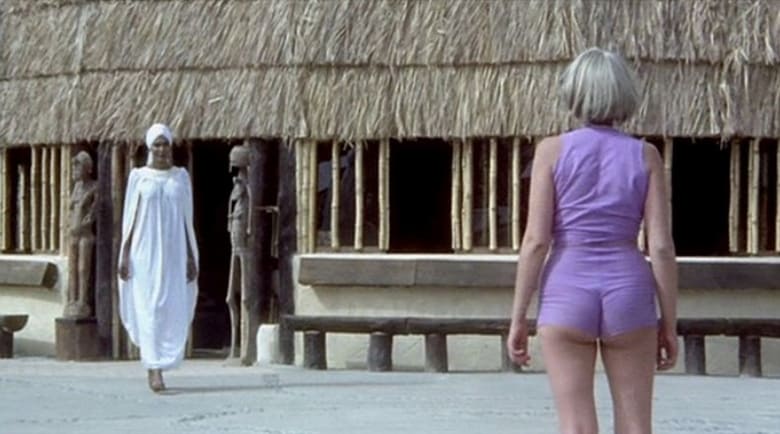


Macumba Sexual is an almost masterpiece. Franco remakes "Vampyros Lesbos" with a transgender theme! Replacing the irreplaceable Soledad Miranda is the commanding Ajita Wilson, the most beautiful black she-male in cinema history. She's seducing Lina Romay (as her blonde actress title "Candy Coaster") to take her role as some pan-sexual goddess of lust. The plot is low on incident and keeps to maybe 3 locations, all around a hotel. Its a breathtaking experience despite this, gorgeous and alive with subversive sexual metaphors. Throughout the film, Lina is haunted by physical objects
that are both masculine and feminine at the same time while Franco never hides the fact that Ajita is transgender. He attacks the gender binary and really scrambles what an erotic horror film can be. For him this is an exploitative ride to attack homophobia and sexual insecurity. I don't know if its respectful to trans people, but I think its firmly on their side and is the most brave, entertaining and early examples of the subject in cinema.
Voodoo Passion is likewise a minor classic. Playing similarly to both "Virgin Among the Living Dead" and the formula of "Succubus" and "Nightmares Come at Night", I think Voodoo Passion plays better than all three. It has an impressive production, flawless cinematography, a beautiful score, truly erotic sex scenes, a game cast and some fabulous direction. It also irons out some flaws in the highly disjointed narratives of those previous films. You could only dock it points for being predictable, but Jess provides enough twists visually and narratively that you can call this a successful jazz variation.
Revenge/Usher is "final level Franco". You can't appreciate this until you know his oeuvre, biography and financial limitations. I would call it something of a no-budget masterpiece if Eurocine producers didn't poorly edit it into the kitsch it is today. Franco shot a fairly personalized but tonally correct version of Poe's classic with no budget. Had Jess had a few dollars more, it would be comparable to his Dracula. But Eurocine didn't like it, added 10 minutes of footage from Dr Orloff(!) and then added poorly done inserts to try and smooth it out. They did the same to "Virgin" apparently. If you know the story behind this film, its quite an eye-opener and an amazing demonstration of Franco's genius, but this is NOT for casual fans or horror fans.
Devil Hunter is a solid Eurotrash ride. Its a camp spoof of racist cannibal films made in Italy at the time and it still works as an anti-racist horror film. Franco shows great kindness for black people in his films, especially primitive tribes. This film paints the white characters as just as barbaric and maybe twice as depraved. Like the transgressive bits of transgenderism in Macumba, Franco displays his radicalism not in preachy dialogue, righteous characters or obvious gestures. He uses the power of ironic montage, contrast, dialectical materialism that he learned as a young admirer of Eisenstein. Devil Hunter is surprisingly long and quite absurdist, but its an epic enjoyment for his fans or anyone who is in on the joke. Also, just remember that the bug-eyed native is essentially "Morpho". This will make sense later...
Death/Blues is a small political thriller from Franco's early film period. Its gorgeous, well-paced and extremely heavy on dialogue. While its a refreshing break from many films of its time, it lacks the unique style that Franco would patent later. But it still has his hallmarks: anti-racism, proletariat sympathies, revenge, a sexy tropical atmosphere and a good soundtrack. Its evidence of Franco's ability to handle your regular commercial film but such a solid B&W caper is a footnote to his career and thats a compliment. I still recommend it for the time capsule appeal and the biographical nature of the story.
Mondo Cannibal is known as a piece of shit, but it has its moments. Its hated by fans of the cannibal genre because its low on gore, cannibals and action. But the plot is quite good and would be resurrected for "Diamonds...". This film is a bit of a chore because its maybe Franco's slowest and least artistic film, but it has (shockingly) some of the best photography of this period and the real sell is Sabrina Siani, who is inhumanly attractive and naked throughout the film. I wish this film was as progressive as the other Franco jungle films, but its no big loss because all of the natives are played by Italians! Actually, I suspect that was a joke and that the film is lampooning Italians taste for gore and their rampant anti-black racism. I've heard Franco diss Italian directors for their desire to be seen as white/American and this film is his rejection of the Italian schlock directors he is still lumped in with. In retrospect, this film was an intentionally "bad" anti-gore film.
How to Seduce a Virgin is a not-as-strong remake of the exquisite Eugenie, but it has its areas of supremacy. The sexual content here is excellent, the cast is different but equal, the production is smaller but more moody. This is kind of a dark X-rated doppelganger of a classic. There are some plot tweaks and maybe the best substitution is Lina Romay as the helpless minion. This might be her best role, likewise the underrated Alice Arno.
Mansion/Living Dead is basically a re-do of Bloody Moon, but serving Franco's sensibilities. We have some sexy Spanish girls at a hotel with a slasher. I still prefer Moon, but Mansion is close in quality. It leans towards a smaller, more absurd plot and a more hypnotic, dreamy style of directing. What Mansion does have is better dialogue, sexier lesbian action and a phenomenal female gimp character who steals the entire film each time she arrives. This film becomes a personal account of Franco's relationship with Lina and his own guilt in keeping this much younger, wilder woman to himself, a rather bookish man of small means. Many films from this period revolve around their real world romantic dynamic, its up's and down's and sadomasochism. Lina is more than a muse in these films. She's a strong actress with the unique gift of having a film told through her and about her.
Fall of the Eagles is the cheapest Franco film I've ever seen. It literally a couple really well-directed scenes about a Nazi love triangle before, during and after WW2 with some stock footage linking it together. The performances are strong from Christopher Lee and Mark Hamill (TWO fucking Jedi's directed by the guy who helped inspire Yoda!!!!) while Joe Estavez's son gives what might be the worst acting performance ever. The entire film is so uneven yet so watchable, a perfect time waster. Considering it cost nothing, I didn't feel cheated. It reminds me of the much worse Full Moon films that obsessively use WW2 as a backdrop. Despite its many limitations, Eagles IS a very serious, crafted and poignant story.
Dr Orloff's Monster is a well-made little thriller, way more conservative than its radical predecessor, but it introduces some important tropes into the Franco canon: adultery turning to murder (But Who Raped Linda?) and a young girl inheriting a dark castle of evil secrets (Virgin..., Daughter of Dracula). The plot and style of this film provides the gist of the much more entertaining Erotic Rites of Frankenstein, but you won't be disappointed in the noir-esque photography and what was once groundbreaking treatment of sex and violence. But its no match for...
The Awful Dr. Orloff. Finally I review the one that made Jess Franco a famous international genre director. I've watched it before but its much better with more context of what it spawned. Its been written that Orloff is a rip-off of Eyes Without a Face. Franco denies it and I believe him as The Brain That Wouldn't Die is also ridiculously similar to these two films. I think we have a case of 3 people thinking the same thing at once: surgical horror. They all were deconstructing Gothic horror films and predicting the rise of abused plastic surgery. Eyes is the classiest of the 3, Brain the most vulgar and Franco's little film is a perfect blend of both. Its evident how much the suggestive dialogue and rape-themed violence was in such a Catholic, conservative culture. And this is really the most expressionist and epic film of Franco's career. Its just a finely directed old school horror film that no one can fault. But Francophiles will take sweet pleasure in how personal the film reveals itself to be all these years later.
We witness the birth of Franco's most personal and repeated plot device: The Master and Slave. Dr Orloff (who would return so many times) is a mad surgeon based on Jess' army doctor father and in extension the Generalissimo Franco. He's an affluent, cruel, bourgeois monster, but physically and emotionally human in every way. Early on its revealed that his deep seated obsession with female flesh comes from his own insecurity about control, aging and dying. This rings as a confession of Jess' later lustful work as Orloff's violence is carried out by his demeaned bug-eyed relative, "Morpho". This is an obvious placeholder for Jess and Jess would even play the Morpho role in following films. Is Franco's entire filmography as actor/director his working through a tyrannical Father complex? Definitely.
This film has a solid climax but the rather hollow Dr Orloff's Monster might be even more personal as that film ends with the Morpho monster actually striking down the evil father character. Now read into Orloff killing women to preserve the image of his own daughter? (Or sister in "Faceless") The maternal side of Franco's anxieties would be explored in Jack the Ripper, sibling & daughter incest would pop up later. Having a Mexican father and Cuban mother, I suspect Jess' mother was dark-skinned, explaining his fetish for light skin but his distanced but bleeding heart for darker skinned women. Its so obvious why he found special balance in Soledad Miranda and then Lina Romay. The strange abusive childhood Jess had with some 8 siblings in a fascist militaristic surgeon's home spawned a lifetime of traumatic confessions on celluloid and video. The racial tension between his parents and the mixed heritage in Latin communities also left a huge impact on the little Jesus, turning him to jazz, political radicalism and becoming a malcontent who purposely deprived his genius from popularity.
I hope this sad but beautiful little genius is at peace now and that this amazing body of work will live on forever and become more legendary than it already is.
Macumba Sexual is an almost masterpiece. Franco remakes "Vampyros Lesbos" with a transgender theme! Replacing the irreplaceable Soledad Miranda is the commanding Ajita Wilson, the most beautiful black she-male in cinema history. She's seducing Lina Romay (as her blonde actress title "Candy Coaster") to take her role as some pan-sexual goddess of lust. The plot is low on incident and keeps to maybe 3 locations, all around a hotel. Its a breathtaking experience despite this, gorgeous and alive with subversive sexual metaphors. Throughout the film, Lina is haunted by physical objects
that are both masculine and feminine at the same time while Franco never hides the fact that Ajita is transgender. He attacks the gender binary and really scrambles what an erotic horror film can be. For him this is an exploitative ride to attack homophobia and sexual insecurity. I don't know if its respectful to trans people, but I think its firmly on their side and is the most brave, entertaining and early examples of the subject in cinema.
Voodoo Passion is likewise a minor classic. Playing similarly to both "Virgin Among the Living Dead" and the formula of "Succubus" and "Nightmares Come at Night", I think Voodoo Passion plays better than all three. It has an impressive production, flawless cinematography, a beautiful score, truly erotic sex scenes, a game cast and some fabulous direction. It also irons out some flaws in the highly disjointed narratives of those previous films. You could only dock it points for being predictable, but Jess provides enough twists visually and narratively that you can call this a successful jazz variation.
Revenge/Usher is "final level Franco". You can't appreciate this until you know his oeuvre, biography and financial limitations. I would call it something of a no-budget masterpiece if Eurocine producers didn't poorly edit it into the kitsch it is today. Franco shot a fairly personalized but tonally correct version of Poe's classic with no budget. Had Jess had a few dollars more, it would be comparable to his Dracula. But Eurocine didn't like it, added 10 minutes of footage from Dr Orloff(!) and then added poorly done inserts to try and smooth it out. They did the same to "Virgin" apparently. If you know the story behind this film, its quite an eye-opener and an amazing demonstration of Franco's genius, but this is NOT for casual fans or horror fans.
Devil Hunter is a solid Eurotrash ride. Its a camp spoof of racist cannibal films made in Italy at the time and it still works as an anti-racist horror film. Franco shows great kindness for black people in his films, especially primitive tribes. This film paints the white characters as just as barbaric and maybe twice as depraved. Like the transgressive bits of transgenderism in Macumba, Franco displays his radicalism not in preachy dialogue, righteous characters or obvious gestures. He uses the power of ironic montage, contrast, dialectical materialism that he learned as a young admirer of Eisenstein. Devil Hunter is surprisingly long and quite absurdist, but its an epic enjoyment for his fans or anyone who is in on the joke. Also, just remember that the bug-eyed native is essentially "Morpho". This will make sense later...
Death/Blues is a small political thriller from Franco's early film period. Its gorgeous, well-paced and extremely heavy on dialogue. While its a refreshing break from many films of its time, it lacks the unique style that Franco would patent later. But it still has his hallmarks: anti-racism, proletariat sympathies, revenge, a sexy tropical atmosphere and a good soundtrack. Its evidence of Franco's ability to handle your regular commercial film but such a solid B&W caper is a footnote to his career and thats a compliment. I still recommend it for the time capsule appeal and the biographical nature of the story.
Mondo Cannibal is known as a piece of shit, but it has its moments. Its hated by fans of the cannibal genre because its low on gore, cannibals and action. But the plot is quite good and would be resurrected for "Diamonds...". This film is a bit of a chore because its maybe Franco's slowest and least artistic film, but it has (shockingly) some of the best photography of this period and the real sell is Sabrina Siani, who is inhumanly attractive and naked throughout the film. I wish this film was as progressive as the other Franco jungle films, but its no big loss because all of the natives are played by Italians! Actually, I suspect that was a joke and that the film is lampooning Italians taste for gore and their rampant anti-black racism. I've heard Franco diss Italian directors for their desire to be seen as white/American and this film is his rejection of the Italian schlock directors he is still lumped in with. In retrospect, this film was an intentionally "bad" anti-gore film.
How to Seduce a Virgin is a not-as-strong remake of the exquisite Eugenie, but it has its areas of supremacy. The sexual content here is excellent, the cast is different but equal, the production is smaller but more moody. This is kind of a dark X-rated doppelganger of a classic. There are some plot tweaks and maybe the best substitution is Lina Romay as the helpless minion. This might be her best role, likewise the underrated Alice Arno.
Mansion/Living Dead is basically a re-do of Bloody Moon, but serving Franco's sensibilities. We have some sexy Spanish girls at a hotel with a slasher. I still prefer Moon, but Mansion is close in quality. It leans towards a smaller, more absurd plot and a more hypnotic, dreamy style of directing. What Mansion does have is better dialogue, sexier lesbian action and a phenomenal female gimp character who steals the entire film each time she arrives. This film becomes a personal account of Franco's relationship with Lina and his own guilt in keeping this much younger, wilder woman to himself, a rather bookish man of small means. Many films from this period revolve around their real world romantic dynamic, its up's and down's and sadomasochism. Lina is more than a muse in these films. She's a strong actress with the unique gift of having a film told through her and about her.
Fall of the Eagles is the cheapest Franco film I've ever seen. It literally a couple really well-directed scenes about a Nazi love triangle before, during and after WW2 with some stock footage linking it together. The performances are strong from Christopher Lee and Mark Hamill (TWO fucking Jedi's directed by the guy who helped inspire Yoda!!!!) while Joe Estavez's son gives what might be the worst acting performance ever. The entire film is so uneven yet so watchable, a perfect time waster. Considering it cost nothing, I didn't feel cheated. It reminds me of the much worse Full Moon films that obsessively use WW2 as a backdrop. Despite its many limitations, Eagles IS a very serious, crafted and poignant story.
Dr Orloff's Monster is a well-made little thriller, way more conservative than its radical predecessor, but it introduces some important tropes into the Franco canon: adultery turning to murder (But Who Raped Linda?) and a young girl inheriting a dark castle of evil secrets (Virgin..., Daughter of Dracula). The plot and style of this film provides the gist of the much more entertaining Erotic Rites of Frankenstein, but you won't be disappointed in the noir-esque photography and what was once groundbreaking treatment of sex and violence. But its no match for...
The Awful Dr. Orloff. Finally I review the one that made Jess Franco a famous international genre director. I've watched it before but its much better with more context of what it spawned. Its been written that Orloff is a rip-off of Eyes Without a Face. Franco denies it and I believe him as The Brain That Wouldn't Die is also ridiculously similar to these two films. I think we have a case of 3 people thinking the same thing at once: surgical horror. They all were deconstructing Gothic horror films and predicting the rise of abused plastic surgery. Eyes is the classiest of the 3, Brain the most vulgar and Franco's little film is a perfect blend of both. Its evident how much the suggestive dialogue and rape-themed violence was in such a Catholic, conservative culture. And this is really the most expressionist and epic film of Franco's career. Its just a finely directed old school horror film that no one can fault. But Francophiles will take sweet pleasure in how personal the film reveals itself to be all these years later.
We witness the birth of Franco's most personal and repeated plot device: The Master and Slave. Dr Orloff (who would return so many times) is a mad surgeon based on Jess' army doctor father and in extension the Generalissimo Franco. He's an affluent, cruel, bourgeois monster, but physically and emotionally human in every way. Early on its revealed that his deep seated obsession with female flesh comes from his own insecurity about control, aging and dying. This rings as a confession of Jess' later lustful work as Orloff's violence is carried out by his demeaned bug-eyed relative, "Morpho". This is an obvious placeholder for Jess and Jess would even play the Morpho role in following films. Is Franco's entire filmography as actor/director his working through a tyrannical Father complex? Definitely.
This film has a solid climax but the rather hollow Dr Orloff's Monster might be even more personal as that film ends with the Morpho monster actually striking down the evil father character. Now read into Orloff killing women to preserve the image of his own daughter? (Or sister in "Faceless") The maternal side of Franco's anxieties would be explored in Jack the Ripper, sibling & daughter incest would pop up later. Having a Mexican father and Cuban mother, I suspect Jess' mother was dark-skinned, explaining his fetish for light skin but his distanced but bleeding heart for darker skinned women. Its so obvious why he found special balance in Soledad Miranda and then Lina Romay. The strange abusive childhood Jess had with some 8 siblings in a fascist militaristic surgeon's home spawned a lifetime of traumatic confessions on celluloid and video. The racial tension between his parents and the mixed heritage in Latin communities also left a huge impact on the little Jesus, turning him to jazz, political radicalism and becoming a malcontent who purposely deprived his genius from popularity.
I hope this sad but beautiful little genius is at peace now and that this amazing body of work will live on forever and become more legendary than it already is.
Sunday, February 4, 2018
Blood of the Poet 1932 / The Brown Bunny 2003
I've seen Jean Cocteau's seminal film before but I was too dazed & delighted by the camp and absurdity to understand the meanings, but this recent watch was a really emotional education on the history of film grammar's development in surrealist montage. Silent film demanded more profoundly visual language to exceed its limits and also elevate its trappings. No shock that Cocteau's passionate experimental narrative is a post-Marx, proto-postmodern manifesto of Surrealism's social mystic mission to create a political status quo of equality and intellectual honesty. Its more than the typical propaganda film or empty whimsy or technical masturbation we got then and still get now. This a lyrical expression of existentialism for the poet turned auteur director.
Brown Bunny I have seen multiple times and I have a soft spot for it, but it is closer to egocentric masturbation. Vincent Gallo is a learned classical-style director but he can't get beyond his own endless self-reflection to say anything about the world. This is his tribute to Italian NeoRealism but missing all of the resonating substance beyond the Self. His rightwing politics are never explicitly referenced and thus more present in their highlighted absence.
Its not terrible. Its flawlessly directed but the loose script could've been even more loose if it had more powerful moments. There are many great technical directors and clever auteurs like this, but they tend to swing towards a more exploitative commercialist Libertarian view of film capitalism. They don't want help for themselves OR OTHERS but aren't totally socially conservative or fiscally liberal. They are your democratic republicans, "moderates". Opposed to corporately global NeoLiberalism violently, but also global Marxism simply for Nationalist or capitalist reasons.
But are they pure filmmakers? American indie directors like Jerry Lewis, Dennis Hopper, Troma, David Lynch, Russ Meyer, Scorsese, John Waters all started as Middle American conservatives who became more urban and liberal but muted their political radicalism maybe until it was too late. And thus their early work or even later work focus solely on exploiting the current situation instead of making progressive statements about wide subjects. (* I can't say that for Waters, Lynch and maybe recent Troma but...) Conservative directors are focused only on personal subjects, selfish reflections and by default engage in a white nationalist patriarchy that their elder artists were against in the early 20th century. And so their art is often a stale copy, a remodernist painting of a true classic. Thats the Brown Bunny.
And this moderate, middle-of-the-road, non-committal statement of moral ambiguity and emotional grayness is the desired effect, a kind of racist stereotyping by Gallo. The title alludes to Gallo's isolated identity as a minority in a white political party and a member of a mixed blood race he has unhappy connection to. He sticks to mediocrity out of self-identifying, not recognizing the oppression of structuralism's false binaries. The film is thus a mix of classical and jazz tones, primitivism and futurism, disgust with white skin and comfort in it. This is racial self-hatred, shame, guilt and dysmorphia is so apparent and yet still not totally self-aware. There's a kitsch to this. Gallo follows in the long line of Latin directors exploring this unexamined, whitewashed and often demonized racial identity of "not being white enough", but he fears to confront it with anger, dread or revolution. Just fear and resolution.
Because of the commercial artist nature of the film industry, its attracted many talent producers who are capitalists first and artists second. They simply became unleashed independent voices when their commercial careers fizzled. That lends them better philosophy and craft than Hollywood puppet filmmakers, but they aren't totally opposed to the system and try to avoid conflict. Gallo made this film as a protest for his lack of Hollywood offers after the immediate cult success of Buffalo 66. But its a parody of his own narcissism, but still a textured and well-crafted one.
Gallo's Brown Bunny owes itself to many European, Asian and American filmmakers who opposed the apolitical theater he creates with their influences. Its the lazy postmodernism that De Palma and Tarantino often delve into, but they usually have something to say politically or socially beyond the wallpapering of references and gags. Gallo's message is just misanthropic rejection, hate and lack of empathy. He's a damaged man and thats what he wants to show. But does he work through it in his art? Does he arrive at any answers on-screen? Like the similar career of Crispin Glover, this a lot of provocative navel-gazing that is almost exhilarating and has some manufactured beauty, but its too derivative of better work. Its not a time-waster and in many ways I prefer The Brown Bunny to most films. But no one should be shocked this film was badly reviewed and may slip into obscurity. With his sensitivity, intelligence and skill, I hope Gallo finishes his directorial career with a real masterpiece that shows maturity and moral responsibility he performed in Buffalo 66.
Brown Bunny I have seen multiple times and I have a soft spot for it, but it is closer to egocentric masturbation. Vincent Gallo is a learned classical-style director but he can't get beyond his own endless self-reflection to say anything about the world. This is his tribute to Italian NeoRealism but missing all of the resonating substance beyond the Self. His rightwing politics are never explicitly referenced and thus more present in their highlighted absence.
Its not terrible. Its flawlessly directed but the loose script could've been even more loose if it had more powerful moments. There are many great technical directors and clever auteurs like this, but they tend to swing towards a more exploitative commercialist Libertarian view of film capitalism. They don't want help for themselves OR OTHERS but aren't totally socially conservative or fiscally liberal. They are your democratic republicans, "moderates". Opposed to corporately global NeoLiberalism violently, but also global Marxism simply for Nationalist or capitalist reasons.
But are they pure filmmakers? American indie directors like Jerry Lewis, Dennis Hopper, Troma, David Lynch, Russ Meyer, Scorsese, John Waters all started as Middle American conservatives who became more urban and liberal but muted their political radicalism maybe until it was too late. And thus their early work or even later work focus solely on exploiting the current situation instead of making progressive statements about wide subjects. (* I can't say that for Waters, Lynch and maybe recent Troma but...) Conservative directors are focused only on personal subjects, selfish reflections and by default engage in a white nationalist patriarchy that their elder artists were against in the early 20th century. And so their art is often a stale copy, a remodernist painting of a true classic. Thats the Brown Bunny.
And this moderate, middle-of-the-road, non-committal statement of moral ambiguity and emotional grayness is the desired effect, a kind of racist stereotyping by Gallo. The title alludes to Gallo's isolated identity as a minority in a white political party and a member of a mixed blood race he has unhappy connection to. He sticks to mediocrity out of self-identifying, not recognizing the oppression of structuralism's false binaries. The film is thus a mix of classical and jazz tones, primitivism and futurism, disgust with white skin and comfort in it. This is racial self-hatred, shame, guilt and dysmorphia is so apparent and yet still not totally self-aware. There's a kitsch to this. Gallo follows in the long line of Latin directors exploring this unexamined, whitewashed and often demonized racial identity of "not being white enough", but he fears to confront it with anger, dread or revolution. Just fear and resolution.
Because of the commercial artist nature of the film industry, its attracted many talent producers who are capitalists first and artists second. They simply became unleashed independent voices when their commercial careers fizzled. That lends them better philosophy and craft than Hollywood puppet filmmakers, but they aren't totally opposed to the system and try to avoid conflict. Gallo made this film as a protest for his lack of Hollywood offers after the immediate cult success of Buffalo 66. But its a parody of his own narcissism, but still a textured and well-crafted one.
Gallo's Brown Bunny owes itself to many European, Asian and American filmmakers who opposed the apolitical theater he creates with their influences. Its the lazy postmodernism that De Palma and Tarantino often delve into, but they usually have something to say politically or socially beyond the wallpapering of references and gags. Gallo's message is just misanthropic rejection, hate and lack of empathy. He's a damaged man and thats what he wants to show. But does he work through it in his art? Does he arrive at any answers on-screen? Like the similar career of Crispin Glover, this a lot of provocative navel-gazing that is almost exhilarating and has some manufactured beauty, but its too derivative of better work. Its not a time-waster and in many ways I prefer The Brown Bunny to most films. But no one should be shocked this film was badly reviewed and may slip into obscurity. With his sensitivity, intelligence and skill, I hope Gallo finishes his directorial career with a real masterpiece that shows maturity and moral responsibility he performed in Buffalo 66.
Monday, January 29, 2018
Count Dracula 1970 / Night Has a Thousand Desires 1984
Christopher Lee played Dracula many times for Hammer Studios but famously disliked their treatment of the character. Franco directs Lee's single non-Hammer Dracula film and, because of its faithfulness to the plot and tone of the source material, this became Lee's favorite outing as the count. And its easy to see why. Lee shows off some fearsome acting that brings a deadness and evil that is lacking in his more famous roles. The entire film is modestly budgeted, but the minimalism serves the foggy atmosphere and Gothic staging. This is one of Franco's finest examples of restrained directing. His touch is evident in the moments of extreme horror (like Dracula's brides eating a baby) and his excellent use of inner montage through zooms and understated motion. The highlight of this impeccable production is probably the fine casting, including Soledad Miranda in her first vampire role. From the get-go, she is as elegant and seductive as possible. Her tragic aura was never more pronounced and useful to a film and you can see Franco slowly falling for her beauty. This film is an important step in Franco's career as he finds a special muse and gravitates to truly tonal, disturbing horror and away from the simpler, poppier horror stylings of his Orloff films.
I revisited "Other Side of the Mirror" and it feels like a tone poem to Soledad's abrupt death and the dashed romantic feelings he held for her. Its interesting how that film is the rare example of Franco indulging in realism and overt dialogue about philosophy. I bring that film up to highlight that Franco's spacey minimalist indulgence in imagery was a concentrated style that he could break away from if he desired. That helps process his more extreme explorations in style. He knew exactly what he was doing.
NHATD is the most extreme work of cinematic style Franco ever gave us. It makes Diabolical Dr Z look like a Dragnet episode. Its essential in understanding Franco's aims and roots as an artist. The entire experience is not dependent on its thin plot for anything but visual tone and a physical stage for his actor subjects. Almost nothing of incident or attraction happens. I'm blanking on anything happening at all besides some love-making and a 30 second shot of Lina Romay walking slowly towards frame. How is this the most beautiful film I've seen? Because its almost pure documentary of reality except for Franco's experiment with time and editing. All actors are shown lifeless, tranced, ghostly, subjected. Are they in a dream or a ghost world? By simply erasing the action, cutting and sounds we expect, Franco uses our expectations against us and lets our imagination create its own sense of dream space. Its comparable to the effect of Charleton Heston spending reels of "The Omega Man" wandering alone through a psychological warzone to minimalist jazz. But this is way more radical. Franco doesn't give us any surreal or supernatural reason for this affected realism. Its simply his darkly romantic vision of life.
My theory is that Franco's entire aesthetic derives from Soviet montage theorists like Eisenstein and Pudovkin. Franco, perhaps more than any director ever, synthesized their unique views into a style of montage adaptable to any and all narratives. His entire career is practice in applying his profound knowledge of montage to as many films as possible but as economically as possible. NHATD is maybe the culmination of a lifetime of craft and his analysis of the very hypnotic effect of cinema itself. He is asking "What is cinema"? At the depths of finance and obscurity, he finally has the courage to make a film that is anti-commercial and only interested in exploring the power of the camera. And it is triumphant & transcendent.
I revisited "Other Side of the Mirror" and it feels like a tone poem to Soledad's abrupt death and the dashed romantic feelings he held for her. Its interesting how that film is the rare example of Franco indulging in realism and overt dialogue about philosophy. I bring that film up to highlight that Franco's spacey minimalist indulgence in imagery was a concentrated style that he could break away from if he desired. That helps process his more extreme explorations in style. He knew exactly what he was doing.
NHATD is the most extreme work of cinematic style Franco ever gave us. It makes Diabolical Dr Z look like a Dragnet episode. Its essential in understanding Franco's aims and roots as an artist. The entire experience is not dependent on its thin plot for anything but visual tone and a physical stage for his actor subjects. Almost nothing of incident or attraction happens. I'm blanking on anything happening at all besides some love-making and a 30 second shot of Lina Romay walking slowly towards frame. How is this the most beautiful film I've seen? Because its almost pure documentary of reality except for Franco's experiment with time and editing. All actors are shown lifeless, tranced, ghostly, subjected. Are they in a dream or a ghost world? By simply erasing the action, cutting and sounds we expect, Franco uses our expectations against us and lets our imagination create its own sense of dream space. Its comparable to the effect of Charleton Heston spending reels of "The Omega Man" wandering alone through a psychological warzone to minimalist jazz. But this is way more radical. Franco doesn't give us any surreal or supernatural reason for this affected realism. Its simply his darkly romantic vision of life.
My theory is that Franco's entire aesthetic derives from Soviet montage theorists like Eisenstein and Pudovkin. Franco, perhaps more than any director ever, synthesized their unique views into a style of montage adaptable to any and all narratives. His entire career is practice in applying his profound knowledge of montage to as many films as possible but as economically as possible. NHATD is maybe the culmination of a lifetime of craft and his analysis of the very hypnotic effect of cinema itself. He is asking "What is cinema"? At the depths of finance and obscurity, he finally has the courage to make a film that is anti-commercial and only interested in exploring the power of the camera. And it is triumphant & transcendent.
Sunday, January 28, 2018
The Toxic Avenger Parts 2 & 3 / 1989
One of my clearest childhood memories is discovering the VHS copy of the first 3 Toxic Avenger movies at a restaurant/gas station's mini-video store. I don't even know if such things exist anymore. The VHS tapes they stocked must have been mainly independent but the Toxic Avenger 2 was distributed by Warner Bros home video, amazingly. And so these two films capture the peak and fall of Troma in a movie business sense. Coming off of the gritty, tasteless but ambitious "Troma's War", Toxic 2 is the most professional production Troma ever made. Lloyd Kaufman and Michael Herz shared directing duties as usual, but they had help from 4 different units. Not so crazy when you realize they shot on location on 2 continents, had to meet semi-major studio Lorimar's post-production schedule and only had a mild breather before shooting Toxic 3.
Toxic 2 comes very close to being Troma's masterwork. Kaufman & Herz have the balls to take their biggest opportunity at mainstream exposure and make a brilliantly original and entertaining statement against Illuminati controls in an era where no one really even knew about the corporate enslavement of America. The film opens promoting a utopian paradise in "Tromaville" of multicultural citizens trading freely and dancing in the streets, until a Bilderberg meeting of yuppie satanists, gangsters and puppets plot to kill Toxie among other things (like blowing up the World Trade Center to disrupt trade). In the commentary for Pt 1, Kaufman reveals that he read some early anti-NWO book back in his 70s Yale days which ultimately informed his future radical film business. Seems like he had a real conflict in making this film and couldn't help but load it with as much commentary and anti-mainstream sentiment as possible. I think this makes it a marvel. Where the film ultimately failed is in its editing.
For some reason, the film has a very unnecessary and unmotivated narration dub that spoils many gags and visuals. Also, many Japanese actors are re-dubbed in offensive Engrish (even though Troma's TA2 trailer keeps their voices). But the fatal blow is a tacked on 20 minutes of story that is under-shot overkill after an already fun, serviceable climax. Maybe the boys at Troma were excessive or maybe they had to rush a cut out to Lorimar/WB. I am very curious to find out.
But still there's 80 minutes of gold here that is the best Troma ever produced. Toxie was a major merch and cartoon mascot at the time (can we speculate "Captain Planet" is Turner execs' Toxie ripoff?), so Toxic 2 is more kid-friendly and lighthearted. The gore, villainy and heroism is still hard-edged but cartooned to an extreme surrealism that perfectly matches the superhero/comic book style. Anyone knocking the film's broad humor, flat dimension, childish logic or gritty execution doesn't get that this is political theater for 80s fanboys and fantasy fans.
The film's most memorable sequence is an epic choreographed ballet of cartoon violence aiming Death Wish/Taxi Drive vigilantism at the film's heirarchy of symbolic bad guys. The Toxic Avenger, a kind of pan-racial, gender-crossed (the tutu is an amazing superhero costume) and transhuman knight who slays representatives of corrupted proletarians. Gays, hillbillies, Jews, sports stars, the church, punk rockers. Every subculture that has been turned against their own interest is lampooned for their own devisiveness and reduced to pawns in a Satanic scheme of corporate world domination. The brutal violence that flows in Kaufman's work reflects an intense fear and hatred of Nazi methodology and these films are catharsis.
The film itself is extremely well-shot, better staged than anything else Troma has done, with plenty of camera coverage, impressive effects and locations and even convincing effects. I think the plot is quite good too. The Toxic Avenger begins a fish-out-of-water journey to Japan to work through his paternal issues and this was meant to bridge to Toxic 3's buried subplot about Toxie's mother issues. I might be stretching, but the unique format of the film seems like a direct influence on Home Alone 2, the only other extremely violent "lost in the city" film for kids.
Now as awesome as Part 2 is, Part 3 is an utter disaster. Plotwise, its maybe better, but the execution is terrible. I assume the funds were pulled on Pt 3 after Pt 2 either offended, abused budget or failed monetarily. Because of this, Troma makes it a much darker and amateur film. Its made with a meaner spirit and higher drama. It really would've worked if it was as well-made and fun as Pt 2. Its maybe twice as ambitious but not nearly as memorable. It feels like a long string of leftover footage from Pt 2 and it even recycles whole scenes from that film for absolutely no reason. I'm confused because Troma always claims that the films were shot at the same time, but its clear some time has passed as Kaufman's infant daughter has aged at least a year, the fashion styles have changed and the quality of the camera had definitely fallen. Its very similar in production style (and script) to the Class of Nuke 'Em High sequels made at the time. Lots of clumsy crowd scenes, weak humor, under-directing and a half-baked message about ecology and yuppie-ism... with lame heavy metal pandering. Toxie 3 would be remade essentially as Sgt Kabukiman NYPD which is probably a better film, but Toxie 3 does have its key sequences (mainly gore fx courtesy of Redneck Zombies' Pericle Lewnes).
Troma would rebound quality-wise with Tromeo & Juliet but would never make films as balanced or big as Toxie 2 (or arguably Toxie 3). Its a shame. The Toxic Avenger is an amazing symbol of freedom and cinematic heroism. I hope there's some happy ending for Troma and that their greatest creation never ends up as any corporation's unspectacular, nostalgic "intellectual property". Thankfully, Troma is such a fringe company, like Full Moon, that big studios are probably afraid of buying them in fear of looking too greasy or leftist themselves. Or maybe today's execs have never seen a Troma films. Thats wishful thinking. But somehow suburban & urban fart-sniffers need to discover these films and support them to make better ones. Thats was a titanic feat in the 1980s and it hasn't gotten easier. Whatever the solution is, its out there and I hope Lloyd and Michael find it soon enough.
Edit: I would be remiss if I didn't mention the sweeping anti-Asian racism in Pt 3's depiction of the devil. Is it camp or serious? The devil is a green-skinned dragon with a "fu manchu" mustache. The Japanese funded most of Pt 2 but pulled out on Pt 3 too. It kinda feels like a nationalist F--k You and couldn't be well received by the Asian audience. That really hurts Troma. Sgt Kabukiman is sort of intentionally ignorant and racist about Japanese culture as well, but its also flattering in some ways but still definitely exploitative. Is Troma Zionist? They hate Disney. They love violence and have a pro-military streak but they never show any extremist capitalist or nationalist politics like Cannon, not beyond the average NY/NJ conservatives. Troma are somewhat conservative socially but extremely conservative with their savings, which has given them long life but hasn't inspired their workers or helped their product become professional. Its a weird situation. They have the right morals but don't practice what they preach and don't exactly live up to what they sell. Thats the Z-grade cinema world. But its better than an F.
I would say Troma are Green Party these days and were early NeoLiberals before becoming Anarchist Capitalist in the 80s and then just Conservative Democrats through Clinton until Bush made them really seek the Far Left. I would appreciate a 2018 Troma film now more than ever, specifically a Toxie 5.
Toxic 2 comes very close to being Troma's masterwork. Kaufman & Herz have the balls to take their biggest opportunity at mainstream exposure and make a brilliantly original and entertaining statement against Illuminati controls in an era where no one really even knew about the corporate enslavement of America. The film opens promoting a utopian paradise in "Tromaville" of multicultural citizens trading freely and dancing in the streets, until a Bilderberg meeting of yuppie satanists, gangsters and puppets plot to kill Toxie among other things (like blowing up the World Trade Center to disrupt trade). In the commentary for Pt 1, Kaufman reveals that he read some early anti-NWO book back in his 70s Yale days which ultimately informed his future radical film business. Seems like he had a real conflict in making this film and couldn't help but load it with as much commentary and anti-mainstream sentiment as possible. I think this makes it a marvel. Where the film ultimately failed is in its editing.
For some reason, the film has a very unnecessary and unmotivated narration dub that spoils many gags and visuals. Also, many Japanese actors are re-dubbed in offensive Engrish (even though Troma's TA2 trailer keeps their voices). But the fatal blow is a tacked on 20 minutes of story that is under-shot overkill after an already fun, serviceable climax. Maybe the boys at Troma were excessive or maybe they had to rush a cut out to Lorimar/WB. I am very curious to find out.
But still there's 80 minutes of gold here that is the best Troma ever produced. Toxie was a major merch and cartoon mascot at the time (can we speculate "Captain Planet" is Turner execs' Toxie ripoff?), so Toxic 2 is more kid-friendly and lighthearted. The gore, villainy and heroism is still hard-edged but cartooned to an extreme surrealism that perfectly matches the superhero/comic book style. Anyone knocking the film's broad humor, flat dimension, childish logic or gritty execution doesn't get that this is political theater for 80s fanboys and fantasy fans.
The film's most memorable sequence is an epic choreographed ballet of cartoon violence aiming Death Wish/Taxi Drive vigilantism at the film's heirarchy of symbolic bad guys. The Toxic Avenger, a kind of pan-racial, gender-crossed (the tutu is an amazing superhero costume) and transhuman knight who slays representatives of corrupted proletarians. Gays, hillbillies, Jews, sports stars, the church, punk rockers. Every subculture that has been turned against their own interest is lampooned for their own devisiveness and reduced to pawns in a Satanic scheme of corporate world domination. The brutal violence that flows in Kaufman's work reflects an intense fear and hatred of Nazi methodology and these films are catharsis.
The film itself is extremely well-shot, better staged than anything else Troma has done, with plenty of camera coverage, impressive effects and locations and even convincing effects. I think the plot is quite good too. The Toxic Avenger begins a fish-out-of-water journey to Japan to work through his paternal issues and this was meant to bridge to Toxic 3's buried subplot about Toxie's mother issues. I might be stretching, but the unique format of the film seems like a direct influence on Home Alone 2, the only other extremely violent "lost in the city" film for kids.
Now as awesome as Part 2 is, Part 3 is an utter disaster. Plotwise, its maybe better, but the execution is terrible. I assume the funds were pulled on Pt 3 after Pt 2 either offended, abused budget or failed monetarily. Because of this, Troma makes it a much darker and amateur film. Its made with a meaner spirit and higher drama. It really would've worked if it was as well-made and fun as Pt 2. Its maybe twice as ambitious but not nearly as memorable. It feels like a long string of leftover footage from Pt 2 and it even recycles whole scenes from that film for absolutely no reason. I'm confused because Troma always claims that the films were shot at the same time, but its clear some time has passed as Kaufman's infant daughter has aged at least a year, the fashion styles have changed and the quality of the camera had definitely fallen. Its very similar in production style (and script) to the Class of Nuke 'Em High sequels made at the time. Lots of clumsy crowd scenes, weak humor, under-directing and a half-baked message about ecology and yuppie-ism... with lame heavy metal pandering. Toxie 3 would be remade essentially as Sgt Kabukiman NYPD which is probably a better film, but Toxie 3 does have its key sequences (mainly gore fx courtesy of Redneck Zombies' Pericle Lewnes).
Troma would rebound quality-wise with Tromeo & Juliet but would never make films as balanced or big as Toxie 2 (or arguably Toxie 3). Its a shame. The Toxic Avenger is an amazing symbol of freedom and cinematic heroism. I hope there's some happy ending for Troma and that their greatest creation never ends up as any corporation's unspectacular, nostalgic "intellectual property". Thankfully, Troma is such a fringe company, like Full Moon, that big studios are probably afraid of buying them in fear of looking too greasy or leftist themselves. Or maybe today's execs have never seen a Troma films. Thats wishful thinking. But somehow suburban & urban fart-sniffers need to discover these films and support them to make better ones. Thats was a titanic feat in the 1980s and it hasn't gotten easier. Whatever the solution is, its out there and I hope Lloyd and Michael find it soon enough.
Edit: I would be remiss if I didn't mention the sweeping anti-Asian racism in Pt 3's depiction of the devil. Is it camp or serious? The devil is a green-skinned dragon with a "fu manchu" mustache. The Japanese funded most of Pt 2 but pulled out on Pt 3 too. It kinda feels like a nationalist F--k You and couldn't be well received by the Asian audience. That really hurts Troma. Sgt Kabukiman is sort of intentionally ignorant and racist about Japanese culture as well, but its also flattering in some ways but still definitely exploitative. Is Troma Zionist? They hate Disney. They love violence and have a pro-military streak but they never show any extremist capitalist or nationalist politics like Cannon, not beyond the average NY/NJ conservatives. Troma are somewhat conservative socially but extremely conservative with their savings, which has given them long life but hasn't inspired their workers or helped their product become professional. Its a weird situation. They have the right morals but don't practice what they preach and don't exactly live up to what they sell. Thats the Z-grade cinema world. But its better than an F.
I would say Troma are Green Party these days and were early NeoLiberals before becoming Anarchist Capitalist in the 80s and then just Conservative Democrats through Clinton until Bush made them really seek the Far Left. I would appreciate a 2018 Troma film now more than ever, specifically a Toxie 5.
Wednesday, January 24, 2018
Nightmares Come At Night (2nd review) 1970 / The Girl From Rio 1969
Nightmares Come At Night was one of my early favorites when I'd only seen a handful of Jess Franco films. I'm still rather impressed but its clearly 2nd tier Franco, more of an experimental film than a big personal work or radical storytelling. But it IS quite shocking, moving and timeless as I stated in the first review. But this time I was more aware of how the film has Franco really juggling his familiar tropes in a big departure. This film explores his usual dark vixens as victims of oppressive Aryan so-called feminism. He subverts and deconstructs the subtly racist "Betty and Veronica" tropes in Western media, as David Lynch would much later and Hitchcock had already done to a more conservative degree. Franco pulls no punches in exploring the sexual intimidation and systemic degradation by white Europeans to their Latin brothers and sisters. Around this period Jess moved further to a so called "primitivism" and tribal art. The film is full of African and Eastern sounds and shapes and our heroine has a Hindu ceremony before transcending her bleak situation. I imagine Franco was deeply moved by Thich Quang Duc, the Vietnamese Buddhist who set himself on fire famously in 1963, and is lampshading his sacrificial suicide with this film's climax.

The Girl From Rio is a film I can watch endlessly. Its a James Bond-sploitation film that finds its star in "Goldfinger" actress Shirley Eaton who plays a villain more clever, cruel and human than Blofeld. The narrative concerns a Feminist revolution standing in the way of our generic male lead and his useless MacGuffin. In the end, the women triumph and its the greedy nationalist agency that suffers. Its a great plot that luckily has a budget to allow lots of toys for Jess to play with. The film is full of gags, action, setpieces, powerful compositions and elaborate staging. Here he is allowed to run wild into pure surrealism and create a phantasmagorical experience of the cinematic world. This was a major break for him. He never again got a budget to make anything so visually explosive or epically designed, but this solidified his hallucinogenic trademarked style. Maybe he knew this was his final big commercial work and decided to go out with a bang and abuse his budget to make a film as challenging and stylistically daring as possible, career be damned. And he never looked back.
I can't believe these films were made a year apart. That year shows everything Franco gave up and everything he gained. And in short he did it to be the feminist director that was not yet tolerated in mainstream world markets. Two films in two different arenas and decades but both baring the same bold genius.


The Girl From Rio is a film I can watch endlessly. Its a James Bond-sploitation film that finds its star in "Goldfinger" actress Shirley Eaton who plays a villain more clever, cruel and human than Blofeld. The narrative concerns a Feminist revolution standing in the way of our generic male lead and his useless MacGuffin. In the end, the women triumph and its the greedy nationalist agency that suffers. Its a great plot that luckily has a budget to allow lots of toys for Jess to play with. The film is full of gags, action, setpieces, powerful compositions and elaborate staging. Here he is allowed to run wild into pure surrealism and create a phantasmagorical experience of the cinematic world. This was a major break for him. He never again got a budget to make anything so visually explosive or epically designed, but this solidified his hallucinogenic trademarked style. Maybe he knew this was his final big commercial work and decided to go out with a bang and abuse his budget to make a film as challenging and stylistically daring as possible, career be damned. And he never looked back.
I can't believe these films were made a year apart. That year shows everything Franco gave up and everything he gained. And in short he did it to be the feminist director that was not yet tolerated in mainstream world markets. Two films in two different arenas and decades but both baring the same bold genius.

Lucky the Inscrutable 1967 / She Killed In Ecstasy 1971
Watched 2 more Franco movies and its amazing the growth of this director within a few years.
"Lucky" is a very polished, commercial spy spoof with heavy NeoRealism influences. It builds to a shocking ending that totally changes the context of everything you've watched. Even as a young populist Spanish director, Jess was transgressive and never afraid to lampoon Western ideas, especially the sexist, racist and morally corrupt greed of the US & UK. But he makes sure to deliver a stunning and well-executed product for his producers. Here he works on a Spanish-Italian coproduction so he ups the slapstick, eye candy actors, lavish color and obligatory Romantic elements. The films most understood by Franco's own fans are ones like "Lucky" where he flirts with selling out only to finally transgress or TRANSCEND the restrictive, repressive nature of the subject matter to make a statement of protest. There's a scene where the hero makes love to the Communist female villain (played fabulously by the legendary Rosalba Neri). Franco's following love scene is a bizarre montage of comic book and porno mag images with the faces of Karl Marx and Mao floating through. His anti-hero makes love literally to the idea of Communism within a film thats supposed to sell Nationalism, fascism, white supremacy. There are plenty of 60s James Bond spoofs but how many are well informed Anti-Bond films?
Flash forward a few years and Franco is within a dark, lonely yet liberating transition. His films are becoming much smaller, depressed, sensual and outspoken. "Ecstasy" has the same revenge plot of so many Franco films like Venus in Furs, Other Side of the Mirror and Jack the Ripper (which follow an arc). But Ecstasy's inspiration is a shattered romance, cultural and generational revolution, economic disenfranchisement, scientific liberalism and many other themes that can be tied to his producer's strict "plot" necessities. Its been said that Franco hated plot. Wrong. He simply saw it as tool for artistic expression and, when forced to work within the conservative genres of low budget filmmaking in Europe, he used the Nationalist or Capitalist issued "plot rules" to simply deconstruct themselves and call attention to the futility, materialism and unreality of mass media propaganda.
So again he returns to films about corrupt authorities, spies, detectives, prisons, Nazis, predatory lesbians, criminals, psychopaths and abusers of power to cut them down and exorcise the psyche of the viewer and himself to create films that are closer to reality at least in psychology. He uses the absurd dreamlike phenomenology of fantasy films to unlock the truths that the timid and conservative call frightening or unpleasant. Jess Franco used commercial cinema like a sugarpill to deliver the medicine of existentialist, nihilist and ultimately socialist thoughts of democratic revolution and utopian change. His films are political protest films but they hide their academic meanings in lurid masks that appeal to the sadomasochistic voyeur in a bourgeois culture of slaves labor and exploitation. His films were for the people who don't need entertainment. They needed art, the one thing the powerful don't want them to have.
"Lucky" is a very polished, commercial spy spoof with heavy NeoRealism influences. It builds to a shocking ending that totally changes the context of everything you've watched. Even as a young populist Spanish director, Jess was transgressive and never afraid to lampoon Western ideas, especially the sexist, racist and morally corrupt greed of the US & UK. But he makes sure to deliver a stunning and well-executed product for his producers. Here he works on a Spanish-Italian coproduction so he ups the slapstick, eye candy actors, lavish color and obligatory Romantic elements. The films most understood by Franco's own fans are ones like "Lucky" where he flirts with selling out only to finally transgress or TRANSCEND the restrictive, repressive nature of the subject matter to make a statement of protest. There's a scene where the hero makes love to the Communist female villain (played fabulously by the legendary Rosalba Neri). Franco's following love scene is a bizarre montage of comic book and porno mag images with the faces of Karl Marx and Mao floating through. His anti-hero makes love literally to the idea of Communism within a film thats supposed to sell Nationalism, fascism, white supremacy. There are plenty of 60s James Bond spoofs but how many are well informed Anti-Bond films?
Flash forward a few years and Franco is within a dark, lonely yet liberating transition. His films are becoming much smaller, depressed, sensual and outspoken. "Ecstasy" has the same revenge plot of so many Franco films like Venus in Furs, Other Side of the Mirror and Jack the Ripper (which follow an arc). But Ecstasy's inspiration is a shattered romance, cultural and generational revolution, economic disenfranchisement, scientific liberalism and many other themes that can be tied to his producer's strict "plot" necessities. Its been said that Franco hated plot. Wrong. He simply saw it as tool for artistic expression and, when forced to work within the conservative genres of low budget filmmaking in Europe, he used the Nationalist or Capitalist issued "plot rules" to simply deconstruct themselves and call attention to the futility, materialism and unreality of mass media propaganda.
So again he returns to films about corrupt authorities, spies, detectives, prisons, Nazis, predatory lesbians, criminals, psychopaths and abusers of power to cut them down and exorcise the psyche of the viewer and himself to create films that are closer to reality at least in psychology. He uses the absurd dreamlike phenomenology of fantasy films to unlock the truths that the timid and conservative call frightening or unpleasant. Jess Franco used commercial cinema like a sugarpill to deliver the medicine of existentialist, nihilist and ultimately socialist thoughts of democratic revolution and utopian change. His films are political protest films but they hide their academic meanings in lurid masks that appeal to the sadomasochistic voyeur in a bourgeois culture of slaves labor and exploitation. His films were for the people who don't need entertainment. They needed art, the one thing the powerful don't want them to have.
Tuesday, January 23, 2018
Jack the Ripper 1976 / The Perverse Countess 1974
The Jess Franco train ride continues...
I'm back to reviewing that wonderful cult director who was the king of a few subtly influential genres. This time its a horror period piece and an S&M sexploitation piece.
There are Jess Franco films that are beautiful works of surrealist extravagance and moral radicalism. These two fit that effort. Jack the Ripper finds a lyrical tragedy and masochistic love of "grotesque monstrosity". Ofcourse its done in a camp heir of social satire and historical mirror that is tasteful and actually a blissful thrill. He codified a type of poetic means to producing proud, intelligent thought through the most raw excommunicated self-evolution on the bottom of the economic totem pole. He relates through his jazz and his cinema the pain of indigenous cultures that are colonized, reprogrammed and treated as self-hating cattle. Franco has grown to be one of my favorite humanistic directors and storytellers. I think his philosophy is mostly his own so I can't classify him neatly as anything but a Marxist. And he doesn't use his art for lucrative commerce or egomanicial statements (because he's far too shy and feeling to compete or hurt others). Franco is one of the pure souls in filmmaking who seems scary, craven or mad, but he was simply a genius who was so ghettoized that he looks insane to those who only sip the mainstream.
Whew! Thats all in these films but - ideology ignored - the technical aesthetics are fabulous. Some of the most emotionally directed films I've ever watched but it may lose viewers with his paper-thin plot details, totally faked "dream logic" and lack of fear for "the extreme". Franco revels in the fact that he is not castrated or forced to be timid. He makes his films his way and only the pure hearted such as him can hope to make art. Its commerce or propaganda without a soul's voice fighting to remain independent but unify the world. I think Franco identified as communist but that doesn't fully explain his brilliant viewpoint which seems shaped by a Napoleonic complex of stifled popularity and lust for respect. But he also grew up under the Nationalist leader Generalissimo Franco so he had no chance of reaching leadership or uncensored journalism, so he rejected Franco and adopted a stylized synthesis of both his namesakes - "Jesus Franco". He explores the dichonomy of Self, of man, of a Spaniard, or a beatnik, of a jazz musician, of a person of color. He purges the psyche of the world in each film for each moment of time during production and release, but most importantly prep.
His films always feel worked on in a blustery drug-assisted creative upheaval in his soul or vomit from his eyes... or Third Eye as he often acknowledged beliefs of Eastern mysticism. Often he highlights the creative properties of tribal music, jazz, classical music, African, Renaissance & Baroque painters. Like Picasso, he grew up in a Latin Europe that was still honest and not yet so colonialized, programmed or commercialized. He's a big art class whiz kid who suffers having to work to sell his art. Its the classic case. His work is evidence that it pays off. Imagine how his Earth would've lost such a pure voice of human honesty if he sold out for any master or group. He's a true independent, a true socialist and a true leader that influenced all of cinema from absolute obscurity. The rock band The Residents has a theory that this is the only way true world-changing art is made. Franco is one of those who creates his own story to change the world's story. There are similar and comparable artists but, at least in cinema, Jess Franco is my favorite.
I guess he saw himself a Jesus messiah to a Franconian satanism. In a sense, he sums up most perfectly the psychological "illness" of the modern Ego. He deconstructs and mythologizes The Bible while indulging in anti-pulpit politics and systemic exploitation, enslavement and monetary control. Researching his work in the first half of 2017 and then engaging in the learned ideologies helped me survive such a Hellish 2nd half of friends committing suicide, sinners repenting, injustices coming to light and balance violently taking control from fascist wars.
And as a cinephile I feel like I've come into my own finally finding a director I can unapologetically name as an influence. Thanks for inspiring me, Jess. I hope to spread more of your positive influence through filmmaking.
I'm back to reviewing that wonderful cult director who was the king of a few subtly influential genres. This time its a horror period piece and an S&M sexploitation piece.
There are Jess Franco films that are beautiful works of surrealist extravagance and moral radicalism. These two fit that effort. Jack the Ripper finds a lyrical tragedy and masochistic love of "grotesque monstrosity". Ofcourse its done in a camp heir of social satire and historical mirror that is tasteful and actually a blissful thrill. He codified a type of poetic means to producing proud, intelligent thought through the most raw excommunicated self-evolution on the bottom of the economic totem pole. He relates through his jazz and his cinema the pain of indigenous cultures that are colonized, reprogrammed and treated as self-hating cattle. Franco has grown to be one of my favorite humanistic directors and storytellers. I think his philosophy is mostly his own so I can't classify him neatly as anything but a Marxist. And he doesn't use his art for lucrative commerce or egomanicial statements (because he's far too shy and feeling to compete or hurt others). Franco is one of the pure souls in filmmaking who seems scary, craven or mad, but he was simply a genius who was so ghettoized that he looks insane to those who only sip the mainstream.
Whew! Thats all in these films but - ideology ignored - the technical aesthetics are fabulous. Some of the most emotionally directed films I've ever watched but it may lose viewers with his paper-thin plot details, totally faked "dream logic" and lack of fear for "the extreme". Franco revels in the fact that he is not castrated or forced to be timid. He makes his films his way and only the pure hearted such as him can hope to make art. Its commerce or propaganda without a soul's voice fighting to remain independent but unify the world. I think Franco identified as communist but that doesn't fully explain his brilliant viewpoint which seems shaped by a Napoleonic complex of stifled popularity and lust for respect. But he also grew up under the Nationalist leader Generalissimo Franco so he had no chance of reaching leadership or uncensored journalism, so he rejected Franco and adopted a stylized synthesis of both his namesakes - "Jesus Franco". He explores the dichonomy of Self, of man, of a Spaniard, or a beatnik, of a jazz musician, of a person of color. He purges the psyche of the world in each film for each moment of time during production and release, but most importantly prep.
His films always feel worked on in a blustery drug-assisted creative upheaval in his soul or vomit from his eyes... or Third Eye as he often acknowledged beliefs of Eastern mysticism. Often he highlights the creative properties of tribal music, jazz, classical music, African, Renaissance & Baroque painters. Like Picasso, he grew up in a Latin Europe that was still honest and not yet so colonialized, programmed or commercialized. He's a big art class whiz kid who suffers having to work to sell his art. Its the classic case. His work is evidence that it pays off. Imagine how his Earth would've lost such a pure voice of human honesty if he sold out for any master or group. He's a true independent, a true socialist and a true leader that influenced all of cinema from absolute obscurity. The rock band The Residents has a theory that this is the only way true world-changing art is made. Franco is one of those who creates his own story to change the world's story. There are similar and comparable artists but, at least in cinema, Jess Franco is my favorite.
I guess he saw himself a Jesus messiah to a Franconian satanism. In a sense, he sums up most perfectly the psychological "illness" of the modern Ego. He deconstructs and mythologizes The Bible while indulging in anti-pulpit politics and systemic exploitation, enslavement and monetary control. Researching his work in the first half of 2017 and then engaging in the learned ideologies helped me survive such a Hellish 2nd half of friends committing suicide, sinners repenting, injustices coming to light and balance violently taking control from fascist wars.
And as a cinephile I feel like I've come into my own finally finding a director I can unapologetically name as an influence. Thanks for inspiring me, Jess. I hope to spread more of your positive influence through filmmaking.
G.I. Joe Retaliation 2013
Another Obama Era film from 2013, one of my favorite recent years for cinema. It was such a highly political year for films and Hollywood was just starting to embrace the voice of social media and not yet trying to control it. In 2012, they fed into the hysteria of Mayan calendar apocalypse and with 2013 the bipartisan executives and stars either saw Obama as the Muslim Illuminati antichrist or flipped off the racist paranoid conspiracy theories. A few in the middle saw him for what he is: a popular NeoLiberal puppet with questionable authority but a typically human guy.
GI Joe 2 is interesting because it can't make up its mind and rather cowardly but fiscally walks the line. It casts Dwayne Johnson (Hollywood's Obama surrogate) as its hero. The Rock, like Obama, is a decent person with mediocre skill but a unique star magnetism. Interestingly, as "Roadblock", The Rock plays a militant lackey who is only in authority because the first GI Joe film's All-American white boy protagonist is killed. Already we get rightwing whistleblowing that blacks are subordinate and this liberal change is only temporary. The film shoehorns in some Asian characters for the Asian market but always reminds us that they are inferior to Snake Eyes. That would be true to the source material but its offensive here because Snake Eyes is barely in the story at all and the Asian characters are very important to the plot. In Michael Bay fashion, women are stripper-ish eye candy who are just skilled enough to not come off as mannequins. There's also the lame homophobia and colorism that comes along with every Dwayne Johnson role. Can we admit this guy is a sellout already? If he thinks Barack failed to live up to Ronald Reagan I would say The Rock has failed to live up to Arnold Schwarzenegger.
The topper is the plot set-up by the 2009 predecessor's cliffhanger ending: that The President is a plant from the shadowy Deep State terrorist group Cobra. Now this would be a fair criticism of Obama's NeoLiberal and CIA ties, but "Retaliation" goes out of its way to draw parallels to Isis and The Illuminati. The entire film is a rightwing nut's militaristic fever dream that stops short of Reptilians ruling the planet (ironically, that IS the plot of the far superior 1987 GI Joe animated film).
Obama wasn't the superhero the Democrats claimed he was, but he was far from a bad guy. He was bad at national security, instituting crazy government abuses of surveillance and drone strikes and, when the Dems actually got control of the Senate, he didn't do much for the American citizen unless you were gay or rich. Because he played to whatever the leaders of the party wanted. This is what EVERY president has done since Kennedy. So why cast Obama as a demon? Why replace him with Trump? Because really, as this moronic meathead film displays, Republicans just want strong old school white male values in place with everyone lower than them on the pyramid food chain. Just... because. It feels right to them and this film disgustingly feeds that insanity, selfishness and inferiority. Oh yeah. For no real reason, the 2nd half of the film throws in a pointless role for Bruce Willis to browbeat The Rock, shoot people and give the Joes old white men as backup.
Its odd because while far from egalitarian or radically progressive the G.I. Joe franchise is very much against the regression, racism and sexism in this film. This film lacks the dark faces, estrogen and democratic patriotism that even Stephen Sommers brought to the childish 2009 film.
I love the G.I. Joe cartoon and comic books. This shitty, cynical film has nothing to do with it. It lacks the heart and most of the characters that G.I. Joe fans love. I'm not even talking about kids. A gritty Christopher Nolan style G.I. Joe film isn't a bad idea, but it should avoid everything this film is. But it shouldn't be "Dunkirk" either.
GI Joe 2 is interesting because it can't make up its mind and rather cowardly but fiscally walks the line. It casts Dwayne Johnson (Hollywood's Obama surrogate) as its hero. The Rock, like Obama, is a decent person with mediocre skill but a unique star magnetism. Interestingly, as "Roadblock", The Rock plays a militant lackey who is only in authority because the first GI Joe film's All-American white boy protagonist is killed. Already we get rightwing whistleblowing that blacks are subordinate and this liberal change is only temporary. The film shoehorns in some Asian characters for the Asian market but always reminds us that they are inferior to Snake Eyes. That would be true to the source material but its offensive here because Snake Eyes is barely in the story at all and the Asian characters are very important to the plot. In Michael Bay fashion, women are stripper-ish eye candy who are just skilled enough to not come off as mannequins. There's also the lame homophobia and colorism that comes along with every Dwayne Johnson role. Can we admit this guy is a sellout already? If he thinks Barack failed to live up to Ronald Reagan I would say The Rock has failed to live up to Arnold Schwarzenegger.
The topper is the plot set-up by the 2009 predecessor's cliffhanger ending: that The President is a plant from the shadowy Deep State terrorist group Cobra. Now this would be a fair criticism of Obama's NeoLiberal and CIA ties, but "Retaliation" goes out of its way to draw parallels to Isis and The Illuminati. The entire film is a rightwing nut's militaristic fever dream that stops short of Reptilians ruling the planet (ironically, that IS the plot of the far superior 1987 GI Joe animated film).
Obama wasn't the superhero the Democrats claimed he was, but he was far from a bad guy. He was bad at national security, instituting crazy government abuses of surveillance and drone strikes and, when the Dems actually got control of the Senate, he didn't do much for the American citizen unless you were gay or rich. Because he played to whatever the leaders of the party wanted. This is what EVERY president has done since Kennedy. So why cast Obama as a demon? Why replace him with Trump? Because really, as this moronic meathead film displays, Republicans just want strong old school white male values in place with everyone lower than them on the pyramid food chain. Just... because. It feels right to them and this film disgustingly feeds that insanity, selfishness and inferiority. Oh yeah. For no real reason, the 2nd half of the film throws in a pointless role for Bruce Willis to browbeat The Rock, shoot people and give the Joes old white men as backup.
Its odd because while far from egalitarian or radically progressive the G.I. Joe franchise is very much against the regression, racism and sexism in this film. This film lacks the dark faces, estrogen and democratic patriotism that even Stephen Sommers brought to the childish 2009 film.
I love the G.I. Joe cartoon and comic books. This shitty, cynical film has nothing to do with it. It lacks the heart and most of the characters that G.I. Joe fans love. I'm not even talking about kids. A gritty Christopher Nolan style G.I. Joe film isn't a bad idea, but it should avoid everything this film is. But it shouldn't be "Dunkirk" either.
Anchorman 2 2013
When I saw this in theaters, I was maybe the only person laughing. While it does lose steam in the 2nd half, this satire of news media and specifically rightwing Fox News was a bold Hollywood "fuck you" to the masses that is even more appreciated now in a post-Trump world where media is regressing into conservativism, lowest common denominators and commerce over art.
The film underperformed and had cold reactions from fans of the original Anchorman and was ignored by the "serious film" snobs who failed to see the humor in it. While AM1 was an ironic W. Bush-era celebration of republican white male incompetency, younger audiences missed the joke and saw it a string of catchy one-liners that were paying liberal lip-service. AM2 rectifies this by being aggressively critical of "The Patriarchy". It doesn't play footsie with fratboys and is over giving homage to the lowbrow dad humor comedies of the 70s/80s. Where the first film held a loving mirror up to the dated liberalism of the Ford/Carter administrations, this sequel is a no-hold-barred reflection of Reagan Era racism, sexism, capitalism and cultural irresponsibility. Fans of Will Ferrell should be aware of this light/dark, safe/radical schism in his career sensibility. The 2 "Best of" SNL volumes for Farrell reflect this well.
I would love an Anchorman 3. It seems even more necessary than Part 2, which was a valiant defense of moderate liberalism and an overly gracious resistance to rightwing America's bigoted anti-Obama rhetoric. But we're dealing with a much worse threat now in Trump, who is the exact foot that this great comedy legacy was made to lampoon. An Anti-Trump Anchorman 3 would do be moral support for the entire country and depower the witless white nationalists trying to influence the mainstream. Oh, and it would probably make a fortune too.
But besides the brilliant political satire, the film is just a great exercise in film comedy. Director Adam McKay's formula of improv dialogue, campy acting and ensemble scenes wins... mostly. I think this film suffers from too many celebrity cameos, a terribly unfunny child actor and not relying enough on the cast chemistry of the original. The original 4 comedians are electric together but they don't have many moments to shine. Steve Carrel has a bigger part as he became a bigger star in 9 years, but half of his screentime is dedicated to the less funny Kristine Wiig, who has since fizzled as a comic. Christina Applegate is mostly replaced by Meagan Good and its actually delightful, but then she returns in the duller 2nd half. Hollywood's pro-Hillary agenda is way too distracting here and the politics of star egos is palpable. Thankfully we are past Hillary and Paul Rudd (who is fabulous here) has become a star with a No 1 film to his name.
The only issue with an Anchorman 3 is setting it in an appropriate time span. Would it be set during the first George Bush era? I think that would be an unpopular masterstroke. Sure, no one under 30 remembers that era. Who cares? There's a lot of late 80s/1990s nostalgia and that was such a hilariously lame transition in pop culture. And yet its a rich moment in comedy history to highlight, analyze and lampoon. Caddyshack 2, anyone? SNL Season 10, anyone? "Donnie Darko" nailed that obscure but important time period beautifully so McKay and Ferrell can do it justice.
I can hear the cheesy Whitesnake soundtrack already.
The film underperformed and had cold reactions from fans of the original Anchorman and was ignored by the "serious film" snobs who failed to see the humor in it. While AM1 was an ironic W. Bush-era celebration of republican white male incompetency, younger audiences missed the joke and saw it a string of catchy one-liners that were paying liberal lip-service. AM2 rectifies this by being aggressively critical of "The Patriarchy". It doesn't play footsie with fratboys and is over giving homage to the lowbrow dad humor comedies of the 70s/80s. Where the first film held a loving mirror up to the dated liberalism of the Ford/Carter administrations, this sequel is a no-hold-barred reflection of Reagan Era racism, sexism, capitalism and cultural irresponsibility. Fans of Will Ferrell should be aware of this light/dark, safe/radical schism in his career sensibility. The 2 "Best of" SNL volumes for Farrell reflect this well.
I would love an Anchorman 3. It seems even more necessary than Part 2, which was a valiant defense of moderate liberalism and an overly gracious resistance to rightwing America's bigoted anti-Obama rhetoric. But we're dealing with a much worse threat now in Trump, who is the exact foot that this great comedy legacy was made to lampoon. An Anti-Trump Anchorman 3 would do be moral support for the entire country and depower the witless white nationalists trying to influence the mainstream. Oh, and it would probably make a fortune too.
But besides the brilliant political satire, the film is just a great exercise in film comedy. Director Adam McKay's formula of improv dialogue, campy acting and ensemble scenes wins... mostly. I think this film suffers from too many celebrity cameos, a terribly unfunny child actor and not relying enough on the cast chemistry of the original. The original 4 comedians are electric together but they don't have many moments to shine. Steve Carrel has a bigger part as he became a bigger star in 9 years, but half of his screentime is dedicated to the less funny Kristine Wiig, who has since fizzled as a comic. Christina Applegate is mostly replaced by Meagan Good and its actually delightful, but then she returns in the duller 2nd half. Hollywood's pro-Hillary agenda is way too distracting here and the politics of star egos is palpable. Thankfully we are past Hillary and Paul Rudd (who is fabulous here) has become a star with a No 1 film to his name.
The only issue with an Anchorman 3 is setting it in an appropriate time span. Would it be set during the first George Bush era? I think that would be an unpopular masterstroke. Sure, no one under 30 remembers that era. Who cares? There's a lot of late 80s/1990s nostalgia and that was such a hilariously lame transition in pop culture. And yet its a rich moment in comedy history to highlight, analyze and lampoon. Caddyshack 2, anyone? SNL Season 10, anyone? "Donnie Darko" nailed that obscure but important time period beautifully so McKay and Ferrell can do it justice.
I can hear the cheesy Whitesnake soundtrack already.
Friday, January 12, 2018
Mr and Mrs Smith 2005
Bush-Era police state porn. Brangelina find out they are rival spies, become targets of each other's spy agencies, stick together, kill tons of people and get their jobs back.
Now as Gen X rom-com its fairly strong at addressing domestic tensions and blowing off steam with cute one-liners from its 2 relatable stars, but its also very troubling ideologically. Neither spy is identified as working for the government, but its obvious that they represent left and right wings of the CIA. The entire film is a "How To" on mixed-party marriage. So obviously its lens is a centrist neoliberal take thats not pro-Bush but not anti-Bush either. The film is pro-torture, pro-assassination, pro-unaccountable privatized government agencies and . I mean, its playing off the public's preconceptions anyway but it doesn't have to normalize and idolize the bloodthirsty, authoritarian security policies of America. This is freshly post-9/11, so there its forgivable.
Whats less forgivable is the toxic treatment of its protagonists. Jolie plays the uber female spy. She's impulsive, always right, seductive, impossibly strong and tough and abuses power constantly. Its weird how neolib Hollywood is so supportive of sociopathic traits in women as cute or warranted. Pitt of course is the meat headed, somewhat crass but endlessly redeeming and "perfect" Aryan macho Ken doll. He's only inferior to his woman when he chooses. I wonder if this was inspired by The Clintons.
I really disliked this era of Hollywood and its aged so quickly and revealed itself as heavy Deep State propaganda. Its not as harsh or browbeating as recent Hollywood, but its still faux-progressive, materialistic, amoral and empty outside of its glitz and escapism.
Now as Gen X rom-com its fairly strong at addressing domestic tensions and blowing off steam with cute one-liners from its 2 relatable stars, but its also very troubling ideologically. Neither spy is identified as working for the government, but its obvious that they represent left and right wings of the CIA. The entire film is a "How To" on mixed-party marriage. So obviously its lens is a centrist neoliberal take thats not pro-Bush but not anti-Bush either. The film is pro-torture, pro-assassination, pro-unaccountable privatized government agencies and . I mean, its playing off the public's preconceptions anyway but it doesn't have to normalize and idolize the bloodthirsty, authoritarian security policies of America. This is freshly post-9/11, so there its forgivable.
Whats less forgivable is the toxic treatment of its protagonists. Jolie plays the uber female spy. She's impulsive, always right, seductive, impossibly strong and tough and abuses power constantly. Its weird how neolib Hollywood is so supportive of sociopathic traits in women as cute or warranted. Pitt of course is the meat headed, somewhat crass but endlessly redeeming and "perfect" Aryan macho Ken doll. He's only inferior to his woman when he chooses. I wonder if this was inspired by The Clintons.
I really disliked this era of Hollywood and its aged so quickly and revealed itself as heavy Deep State propaganda. Its not as harsh or browbeating as recent Hollywood, but its still faux-progressive, materialistic, amoral and empty outside of its glitz and escapism.
Subscribe to:
Posts (Atom)