Showing posts with label 1980. Show all posts

Monday, February 12, 2018

Macumba Sexual 1983 / Voodoo Passion 1977 / Revenge in the House of Usher 1983 / Devil Hunter 1980 / Death Whistles to the Blues 1964 / Mondo Cannibal 1980 / How Seduce a Virgin 1974 / Mansion of the Living Dead 1982 / Fall of the Eagles 1989 / Dr. Orloff's Monster 1964 / The Awful Dr. Orloff 1962

11 Jess Franco reviews for you, bitch... Franco-mania!


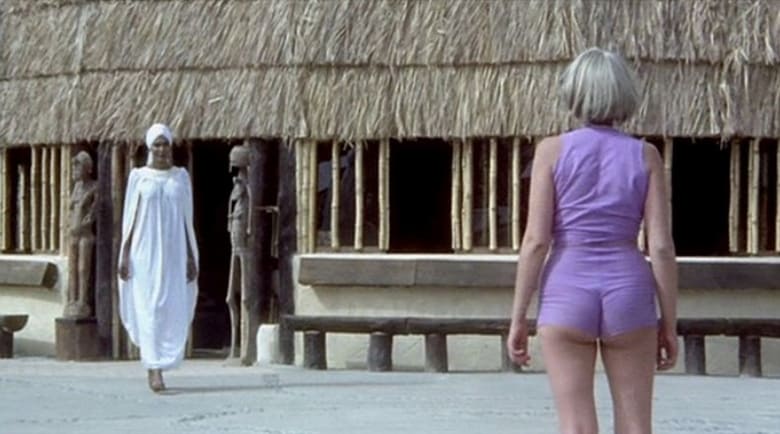
Macumba Sexual is an almost masterpiece. Franco remakes "Vampyros Lesbos" with a transgender theme! Replacing the irreplaceable Soledad Miranda is the commanding Ajita Wilson, the most beautiful black she-male in cinema history. She's seducing Lina Romay (as her blonde actress title "Candy Coaster") to take her role as some pan-sexual goddess of lust. The plot is low on incident and keeps to maybe 3 locations, all around a hotel. Its a breathtaking experience despite this, gorgeous and alive with subversive sexual metaphors. Throughout the film, Lina is haunted by physical objects
that are both masculine and feminine at the same time while Franco never hides the fact that Ajita is transgender. He attacks the gender binary and really scrambles what an erotic horror film can be. For him this is an exploitative ride to attack homophobia and sexual insecurity. I don't know if its respectful to trans people, but I think its firmly on their side and is the most brave, entertaining and early examples of the subject in cinema.

Voodoo Passion is likewise a minor classic. Playing similarly to both "Virgin Among the Living Dead" and the formula of "Succubus" and "Nightmares Come at Night", I think Voodoo Passion plays better than all three. It has an impressive production, flawless cinematography, a beautiful score, truly erotic sex scenes, a game cast and some fabulous direction. It also irons out some flaws in the highly disjointed narratives of those previous films. You could only dock it points for being predictable, but Jess provides enough twists visually and narratively that you can call this a successful jazz variation.

Revenge/Usher is "final level Franco". You can't appreciate this until you know his oeuvre, biography and financial limitations. I would call it something of a no-budget masterpiece if Eurocine producers didn't poorly edit it into the kitsch it is today. Franco shot a fairly personalized but tonally correct version of Poe's classic with no budget. Had Jess had a few dollars more, it would be comparable to his Dracula. But Eurocine didn't like it, added 10 minutes of footage from Dr Orloff(!) and then added poorly done inserts to try and smooth it out. They did the same to "Virgin" apparently. If you know the story behind this film, its quite an eye-opener and an amazing demonstration of Franco's genius, but this is NOT for casual fans or horror fans.

Devil Hunter is a solid Eurotrash ride. Its a camp spoof of racist cannibal films made in Italy at the time and it still works as an anti-racist horror film. Franco shows great kindness for black people in his films, especially primitive tribes. This film paints the white characters as just as barbaric and maybe twice as depraved. Like the transgressive bits of transgenderism in Macumba, Franco displays his radicalism not in preachy dialogue, righteous characters or obvious gestures. He uses the power of ironic montage, contrast, dialectical materialism that he learned as a young admirer of Eisenstein. Devil Hunter is surprisingly long and quite absurdist, but its an epic enjoyment for his fans or anyone who is in on the joke. Also, just remember that the bug-eyed native is essentially "Morpho". This will make sense later...

Death/Blues is a small political thriller from Franco's early film period. Its gorgeous, well-paced and extremely heavy on dialogue. While its a refreshing break from many films of its time, it lacks the unique style that Franco would patent later. But it still has his hallmarks: anti-racism, proletariat sympathies, revenge, a sexy tropical atmosphere and a good soundtrack. Its evidence of Franco's ability to handle your regular commercial film but such a solid B&W caper is a footnote to his career and thats a compliment. I still recommend it for the time capsule appeal and the biographical nature of the story.

Mondo Cannibal is known as a piece of shit, but it has its moments. Its hated by fans of the cannibal genre because its low on gore, cannibals and action. But the plot is quite good and would be resurrected for "Diamonds...". This film is a bit of a chore because its maybe Franco's slowest and least artistic film, but it has (shockingly) some of the best photography of this period and the real sell is Sabrina Siani, who is inhumanly attractive and naked throughout the film. I wish this film was as progressive as the other Franco jungle films, but its no big loss because all of the natives are played by Italians! Actually, I suspect that was a joke and that the film is lampooning Italians taste for gore and their rampant anti-black racism. I've heard Franco diss Italian directors for their desire to be seen as white/American and this film is his rejection of the Italian schlock directors he is still lumped in with. In retrospect, this film was an intentionally "bad" anti-gore film.

How to Seduce a Virgin is a not-as-strong remake of the exquisite Eugenie, but it has its areas of supremacy. The sexual content here is excellent, the cast is different but equal, the production is smaller but more moody. This is kind of a dark X-rated doppelganger of a classic. There are some plot tweaks and maybe the best substitution is Lina Romay as the helpless minion. This might be her best role, likewise the underrated Alice Arno.

Mansion/Living Dead is basically a re-do of Bloody Moon, but serving Franco's sensibilities. We have some sexy Spanish girls at a hotel with a slasher. I still prefer Moon, but Mansion is close in quality. It leans towards a smaller, more absurd plot and a more hypnotic, dreamy style of directing. What Mansion does have is better dialogue, sexier lesbian action and a phenomenal female gimp character who steals the entire film each time she arrives. This film becomes a personal account of Franco's relationship with Lina and his own guilt in keeping this much younger, wilder woman to himself, a rather bookish man of small means. Many films from this period revolve around their real world romantic dynamic, its up's and down's and sadomasochism. Lina is more than a muse in these films. She's a strong actress with the unique gift of having a film told through her and about her.

Fall of the Eagles is the cheapest Franco film I've ever seen. It literally a couple really well-directed scenes about a Nazi love triangle before, during and after WW2 with some stock footage linking it together. The performances are strong from Christopher Lee and Mark Hamill (TWO fucking Jedi's directed by the guy who helped inspire Yoda!!!!) while Joe Estavez's son gives what might be the worst acting performance ever. The entire film is so uneven yet so watchable, a perfect time waster. Considering it cost nothing, I didn't feel cheated. It reminds me of the much worse Full Moon films that obsessively use WW2 as a backdrop. Despite its many limitations, Eagles IS a very serious, crafted and poignant story.

Dr Orloff's Monster is a well-made little thriller, way more conservative than its radical predecessor, but it introduces some important tropes into the Franco canon: adultery turning to murder (But Who Raped Linda?) and a young girl inheriting a dark castle of evil secrets (Virgin..., Daughter of Dracula). The plot and style of this film provides the gist of the much more entertaining Erotic Rites of Frankenstein, but you won't be disappointed in the noir-esque photography and what was once groundbreaking treatment of sex and violence. But its no match for...

The Awful Dr. Orloff. Finally I review the one that made Jess Franco a famous international genre director. I've watched it before but its much better with more context of what it spawned. Its been written that Orloff is a rip-off of Eyes Without a Face. Franco denies it and I believe him as The Brain That Wouldn't Die is also ridiculously similar to these two films. I think we have a case of 3 people thinking the same thing at once: surgical horror. They all were deconstructing Gothic horror films and predicting the rise of abused plastic surgery. Eyes is the classiest of the 3, Brain the most vulgar and Franco's little film is a perfect blend of both. Its evident how much the suggestive dialogue and rape-themed violence was in such a Catholic, conservative culture. And this is really the most expressionist and epic film of Franco's career. Its just a finely directed old school horror film that no one can fault. But Francophiles will take sweet pleasure in how personal the film reveals itself to be all these years later.

We witness the birth of Franco's most personal and repeated plot device: The Master and Slave. Dr Orloff (who would return so many times) is a mad surgeon based on Jess' army doctor father and in extension the Generalissimo Franco. He's an affluent, cruel, bourgeois monster, but physically and emotionally human in every way. Early on its revealed that his deep seated obsession with female flesh comes from his own insecurity about control, aging and dying. This rings as a confession of Jess' later lustful work as Orloff's violence is carried out by his demeaned bug-eyed relative, "Morpho". This is an obvious placeholder for Jess and Jess would even play the Morpho role in following films. Is Franco's entire filmography as actor/director his working through a tyrannical Father complex? Definitely.

This film has a solid climax but the rather hollow Dr Orloff's Monster might be even more personal as that film ends with the Morpho monster actually striking down the evil father character. Now read into Orloff killing women to preserve the image of his own daughter? (Or sister in "Faceless") The maternal side of Franco's anxieties would be explored in Jack the Ripper, sibling & daughter incest would pop up later. Having a Mexican father and Cuban mother, I suspect Jess' mother was dark-skinned, explaining his fetish for light skin but his distanced but bleeding heart for darker skinned women. Its so obvious why he found special balance in Soledad Miranda and then Lina Romay. The strange abusive childhood Jess had with some 8 siblings in a fascist militaristic surgeon's home spawned a lifetime of traumatic confessions on celluloid and video. The racial tension between his parents and the mixed heritage in Latin communities also left a huge impact on the little Jesus, turning him to jazz, political radicalism and becoming a malcontent who purposely deprived his genius from popularity.

I hope this sad but beautiful little genius is at peace now and that this amazing body of work will live on forever and become more legendary than it already is.

Friday, October 27, 2017

THX 1138 (Director's Cut) / Urban Cowboy / Night of the Demon

Watched the good part of THX 1138, the re-edited version from the 2000s. I didn't like my experience but I'm intrigued by the original 70s footage. I haven't seen the original film (but I do like the short film that inspired it), but this seems like a warped experience of a decent esoteric "futurist" film. A lot of it is lost with too much deleted footage of nothingness and pretty shiny objects. Very Kenneth Anger. Obviously very similar to Lucas' student films of cars driving. He's a technician who writes about technology so he can film technology. Thankfully he writes about the dangers to be avoided. He tries to make some political statement. Its topical, generational and not evergreen humor or referencing, but the rest of the film is so innovative and oddly moving, that I give it a pass. Hopefully the 70s cut is more watchable and less ridiculous and pretentious. Like WB took the film from Lucas when they saw how extreme & crazed his vision was. So this new version is the matured, successful, commercialized Lucas trying to correct his old mistakes or insert new theories. He's a fascinating director. As experimental as can be, yet as commercial as can be. I might re-review the Lucas remix after watching the original.

Urban Cowboy was a bore for me because it too predictable in its wholesomeness. And its wholesomeness seemed a bit cheated and dishonest. It tries to be Earthy and only erects a Broadway style of artificiality that is aesthetically tranquil but also lifeless dramatically. The plot is low on conflict and the resolution is ambiguous, tame and not even hopeful. The concept of the plot is good: two people marry quickly and then wonder if they should get divorced. They both find the ideal partner they've always lusted, but realize its better to settle for less because they belong together.

Both characters are written as dumb, impulsive, naive, selfish, incompetent and unaware of love's meaning. But they find love together. Thats a warm romantic type plot of the 1950s. But its dressed up in the culture of honky tonk big city cowboy culture. It paints a picture of accepted hopelessness and insulated ignorance. But its never satirical or cruel to them for being so imperfect. The kinds of films Robert Evans and other Hollywood filmmakers were starting to make after Coppola's Godfather were based on the realism and post-structuralism of the arthouse. But few grasped the original Neorealist movement and interpreted badly, Urban Cowboy being one.

Its glossy, crafted simply and somewhat true to its sources. But its not provoking thought, addressing issues or mining for truth outside of its inherited tropes & cliches. There are lots of films like this where Judy Garland & Mickey Rooney types, "All-American kids" triumph over the complex, damaged, truly vulnerable figures explored in foreign films. This is rightwing propaganda made in reaction to true art of radicals who were fighting oppression and economic ruin elsewhere. Hollywood films like this are sour and it highlights the drastic decline of quality after the 70s boom. Where everything became dumbed down beer for the masses to sleep easier. Lets study films like these but not give them too much credit beyond "pretty, watchable pap".

My horror pick was Night of the Demon (Curse of the Demon in America because they still missed using the N-word). I've watched this film a few times as I've aged and it only grows bigger and better. This is a very, very classy, thoughtful, open-minded, fair study of the power of dark occult knowledge. Unfortunately, it was sold as a money-making popcorn horror film and the producer inserted some gratuitous, extremely dating monster footage in what was a pretty undated work of cinema from Jacques Tournier of "Cat People" fame. This truncated version isn't at all bad because of it, but you thirst for the original vision, especially when the significant edge of the final scene is lost because of too many dollars thrown at the screen. Check it out the UK version first and then move on to the U.S., trust me!


Monday, January 16, 2017

Bloody Moon 1980

The 1980s was a very complicated decade for Jess Franco. He was at his creative peak and commercial low. Franco had finally learned how to produce tight and fast commercial pictures as well as anyone, but he was sort of ghettoized to the outskirts of international exploitation and sleaze as the genres had past their prime. The decade saw Roger Corman, Dick Randall and other B-movie producers losing ground in the international and US markets as Cannon Pictures swiftly dominated and then self-destructed as the first global alternative to Hollywood studios. Only a few entities like Troma and Full Moon survived the 1980s (and they're still going!), but you could add Franco to the list of great filmmakers like Argento, Fulci and Rollin who were edged out of the semi-semi-mainstream by big business and shrinking budgets.

Bloody Moon is then easily one of the last great works for Jess as it became a commercial success worldwide as a horror VHS staple and has actually attained a solid fanbase as one of the more interesting and effective slasher movies from the genre's golden age. Its sleazy, stupid, poorly acted, gratuitous and a little dry on action and character. So its right at home with classics like Pieces, Prom Night and The Prowler because the desired audience experience is simply to give them chills and cheap thrills, which Bloody Moon more than excels at.

Its a grim and anxious adventure set at a Spanish vacation spot where American girls are studying abroad (I don't understand why their school is a private resort, but it is). Unfortunately the girls don't realize there's a very disturbing subplot playing out involving an incestuous, scarfaced sociopath and his deeply fucked up family. Its a good concept even if its predictable and all too familiar to slasher fans. The genre has played with incest too many times (Psycho, Halloween, Bay of Blood, Maniac, Don't Go In The House), but this does add a few twists as Franco had worn out the subject himself. The main twist, again telegraphed way too soon, is still interesting and probably a Franco touch as it fits with his tradition of good-looking monsters and monstrous-looking victims. Overall, the script is pretty good by slasher standards and much better than Franco's usual plots. Its structured well, characters are plentiful and realistic, the dialogue is firm and there's enough mayhem to keep you engaged since the languid pacing can't be helped.

Franco's direction might turn off casual horror fans, but Bloody Moon will impress his devotees. Its one of his most gorgeous and, as a full-on horror film, you get lots of moody night shots and shadow-drenched visuals. It works well contrasted with the exotic and bright Spanish locales. Franco has a good budget here so the cast is attractive and talented enough, the camerawork is lively and the production is textured and even a bit stylish. Its a greasy, cheap production but Franco can hide and accentuate it into something resembling his best work. And while Jess wasn't a fan of Bloody Moon's soundtrack, I think it one of the most appropriate, trading jazz and ambient noise for synth and Goblin-style prog-rock. Its funny that mainstream filmgoers will appreciate the relative quickness of this Franco feature while he and his more obsessive fans may complain that its not slow and artificial enough. Its not his most oneiric film, but there is a thick dreamy quality that brings a nightmare tone to even the most silly moments.

I enjoyed Bloody Moon more than the fan-favorite Venus In Furs and I think its better than most 80s slashers. It has this strong film noir visual palette and the characters have chemistry. You can enjoy this as a piece of schlock or as a very artistic commercial film. It works better than Venus because Franco is aged and self-aware enough to inject much needed humor (that doesn't really work btw) and concedes to deliver the gore and flesh that audiences secretly don't mind mixed with their thrillers. At this point in his career, when Franco had to work with horror or dark subjects, he threw out his pretentious leanings and just dialed up the fun to 11 with comic book villains, nymphomaniac bimbos and self-consciously 1-dimensional throwaway characters and scenes. Its campy more than kitsch and a kind of post-modern slasher almost two DECADES before Wes Craven made Scream. Franco was a grumpy veteran at this point taking a cynical piss on this genre while making sure fans still got their money's worth. That makes Bloody Moon unique, smart and important to the horror genre.

And this leads me to my main takeaway: Jess Franco was one of the earliest anti-sentimentalists in cinema. Most of his films feature totally plastic characters and intentionally flat performances. I always assumed this was just the training of a visual stylist who cared nothing about characterization or acting. But I've learned that Franco adored some actors and nurtured some beautiful performances out of them. In his interviews I realized Jesus Franco was a very dismissive, cynical but still passionate person with a bruised ego. He resented people who deemed him inferior and loved to chop them down to size intellectually. He had very little time for society, its biases and taboos. The lack of emotion, sentiment and humanization is so stark but not something you can easily define when you first discover his films. But you feel the contrast in his early work compared to the melodrama that was prevalent in ALL pre-70s cinema. This sociopathic tone hurt some of his commercial work (like the Fu Manchu films, which needed sympathetic protagonists), but his shallow view of humanity plays beautifully in stories featuring whores, vampires, psychos, abusers, damaged protagonists and outsider weirdos. Blood Moon has its villains being about as likable and broad as the victims. Franco liked to humanize so-called evil and dehumanize the so-called good. Its a very disturbing element to his work but it works because his best films were meant to be disturbing. The two crown jewels of his 80s work, Bloody Moon and Faceless, are perfect examples of Franco's cynical view of humanity, both ending on very sour notes. I will be writing about this more in future reviews now that it is so obviously a part of Franco's power and indistinguishable from his cinematic voice.